
 EN
EN
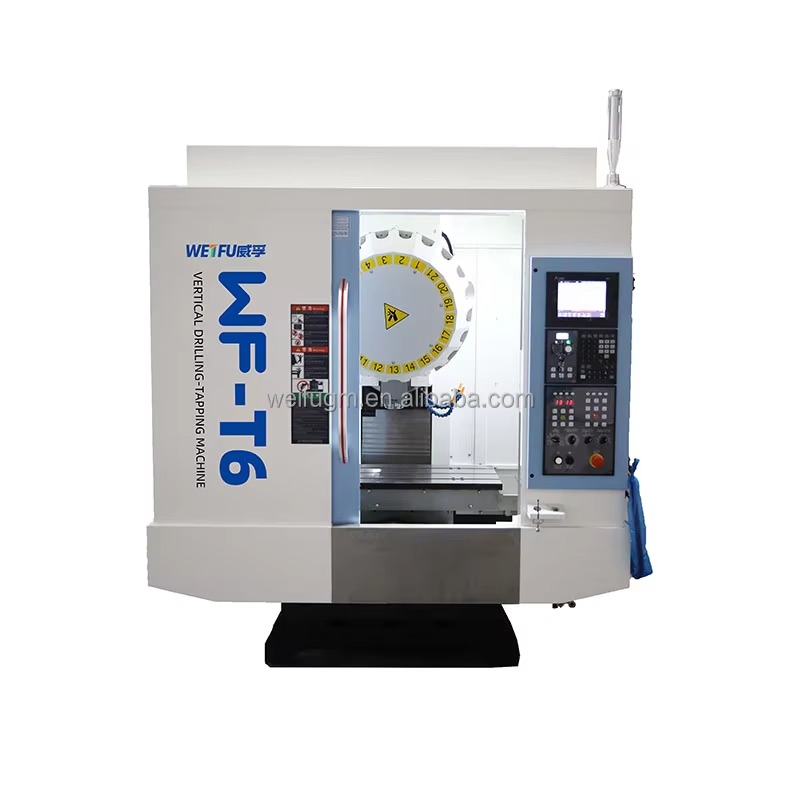
The vertical bridge machining center represents a transformative technology in modern manufacturing, specifically engineered to handle large-scale parts with exceptional precision and efficiency. A vertical bridge configuration positions the cutting spindle vertically above a horizontal worktable, enabling machines to deliver consistent accuracy across expansive workpieces. This design philosophy has become essential for industries requiring high-tolerance operations on heavy, oversized components. Understanding how vertical bridge systems work and why they deliver superior results helps manufacturers make informed investment decisions that directly impact production quality and operational cost effectiveness.
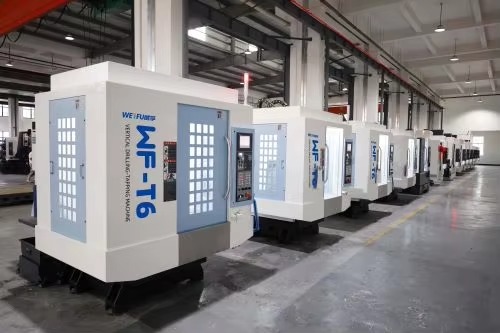
For manufacturers producing large-scale parts in industries such as aerospace, defense, energy, and heavy equipment manufacturing, selecting the right machining platform is critical. The vertical bridge configuration offers distinct advantages over traditional horizontal or smaller vertical setups. Its rigid construction, combined with intelligent spindle positioning, allows operators to machine complex geometries on substantial workpieces without compromising dimensional accuracy. This article explores the technical foundations, operational advantages, and practical applications that make vertical bridge technology the preferred choice for precision-demanding industrial environments.
Understanding Vertical Bridge Architecture and Design Philosophy
Core Structure and Spindle Positioning
A vertical bridge machining center features a distinctive mechanical layout designed to maximize stability and precision during extended cutting operations. The vertical bridge frame spans across a large horizontal worktable, with the spindle assembly suspended from this bridge structure. This overhead positioning eliminates the need for lengthy cantilevered arms, distributing cutting forces more evenly across the machine's frame. The result is a vertical bridge system that maintains exceptional rigidity even under heavy intermittent loads, a characteristic essential when machining large-scale parts that demand consistent surface finish and tight dimensional tolerance throughout extended production runs.
The vertical bridge design inherently provides superior work envelope accessibility compared to conventional gantry arrangements. Operators can position exceptionally large workpieces directly on the machine bed without interference from overhead structures. This accessibility becomes critical when setting up multi-axis operations on large-scale parts that require access from multiple directions. Modern vertical bridge centers incorporate servo-driven linear axes that move the spindle assembly with precision controlled by advanced CNC systems, ensuring repeatability across successive parts and batch production cycles.
Rigidity and Stability Factors
Rigidity stands as the fundamental performance differentiator for vertical bridge systems handling large-scale parts. The bridge structure itself acts as a load-bearing frame that directly transfers cutting forces downward through the spindle column and into the machine foundation. Unlike cantilever designs where cutting forces create moment loads on supporting columns, vertical bridge architecture distributes these forces axially, significantly reducing deflection and vibration. This structural advantage becomes increasingly pronounced as workpiece dimensions and cutting depths increase, making vertical bridge technology the specified choice for precision work on truly large-scale parts.
Thermal stability complements mechanical rigidity in vertical bridge machining centers. The symmetric frame geometry and distributed mass distribution ensure uniform heat absorption across the machine structure. When cutting generates thermal energy, the vertical bridge maintains dimensional stability because heat dissipates consistently throughout the frame rather than concentrating in localized areas. For large-scale parts requiring micron-level accuracy after extended cutting cycles, this thermal stability prevents the gradual drift in position that can occur with less robust machine designs, directly protecting investment in high-tolerance part specifications.
Performance Capabilities for Large-Scale Industrial Applications
Cutting Speed and Feed Rate Precision
The vertical bridge machining center delivers exceptional cutting performance through its combination of structural rigidity and advanced spindle technology. Modern vertical bridge systems operate spindles at variable speeds precisely controlled by digital servo systems, allowing operators to optimize cutting parameters for specific material and geometry combinations. When machining large-scale parts, the ability to apply consistent cutting speed and feed rate throughout extended tool paths directly translates to superior surface finish quality and predictable tool life. The vertical bridge architecture maintains these precision parameters by resisting the vibration and deflection that would otherwise compromise cut consistency on oversized workpieces.
Feed rate control becomes particularly critical when machining large-scale parts across multiple work shifts or production batches. A vertical bridge configuration enables programmable feed rate optimization that adapts to material hardness, tool wear progression, and surface finish requirements. The CNC systems integrated into modern vertical bridge machines continuously monitor spindle load and tool deflection, automatically adjusting feed rates to maintain optimal cutting conditions. This adaptive control capability ensures that large-scale parts produced early in a production run exhibit identical dimensional and surface characteristics to parts completed hours or days later, a consistency requirement that justifies the investment in precision vertical bridge equipment.
Dimensional Accuracy on Complex Geometries
Large-scale parts frequently incorporate complex internal passages, angled surfaces, and multi-plane features that demand exceptional three-dimensional positioning accuracy. The vertical bridge machining center addresses this requirement through multi-axis interpolation controlled by sophisticated CNC programming. The vertical bridge spindle can be positioned with repeatability typically within 0.001 inches or better, enabling operators to machine intricate details that would be impossible to achieve on less rigid equipment. For applications such as aerospace engine blocks, submarine housings, or large industrial pump bodies, this dimensional accuracy becomes a competitive necessity rather than an optional feature.
Surface finish quality on large-scale parts depends directly on the machine's ability to maintain consistent cutting parameters and minimize vibration-induced tool chatter. The vertical bridge design provides the structural foundation necessary for achieving optimal surface finishes across expansive workpiece areas. When combined with high-resolution linear encoders that provide real-time position feedback to the CNC controller, vertical bridge technology enables finishing operations that produce surface roughness values below 0.8 microinches. This capability often eliminates secondary finishing operations, reducing overall part production cost despite the higher initial equipment investment associated with precision vertical bridge systems.
Operational Advantages and Manufacturing Economics
Setup Efficiency and Tool Management
Implementing a vertical bridge machining center streamlines the setup process for large-scale parts by consolidating multiple machining operations on a single platform. A vertical bridge system accommodates workpieces that would require positioning on multiple machines using conventional equipment configurations. Tool changers integrated into modern vertical bridge centers maintain extensive tool libraries, automatically selecting and positioning cutting tools for sequential operations. This consolidation directly reduces setup time between operations, minimizes workpiece repositioning errors, and decreases the handling time that traditionally extends production lead times for large-scale parts. Operators can execute complex machining sequences that would otherwise demand manual intervention, improving safety while enhancing schedule predictability.
Preventative maintenance becomes more straightforward when adopting vertical bridge technology for large-scale parts production. The accessible spindle location and organized hydraulic/pneumatic routing enable systematic inspection and component replacement according to manufacturer-specified intervals. Thermal growth compensation systems integrated into precision vertical bridge controls automatically account for spindle thermal expansion, ensuring that tool offsets remain valid across full production runs. These systematic maintenance and compensation protocols reduce unscheduled downtime and prevent the dimensional growth that could render partially completed large-scale parts scrap, directly protecting against costly production interruptions.
Cost per Part and Production Volume Economics
The economics of large-scale parts machining shift favorably toward vertical bridge systems when analyzing total cost per part across production volume scenarios. Although vertical bridge equipment carries higher capital investment compared to smaller conventional machines, the ability to machine complex features in single setups dramatically reduces labor and handling overhead. Production lead times decrease because vertical bridge systems complete in hours what would require days of repositioning across multiple machines. For manufacturers producing large-scale parts under competitive pricing pressure, this efficiency advantage often translates into market-winning cost structures that justify the substantial equipment investment.
Quality consistency realized through vertical bridge technology reduces scrap rates and rework expenses, further improving manufacturing economics for large-scale parts. Statistical quality control programs benefit from the dimensional repeatability inherent in precision vertical bridge systems, enabling tighter process control and fewer inspection requirements. When a vertical bridge machining center consistently produces large-scale parts within specified tolerance bands, downstream assembly operations become more predictable and less labor-intensive. Customers gain confidence in part quality, often reducing incoming inspection stringency and enabling faster production flow through their own assembly lines. These cascading benefits throughout the supply chain reinforce the competitive advantage achieved by manufacturers investing in quality vertical bridge platforms.
Selecting and Implementing Vertical Bridge Systems
Technical Specification Evaluation
Evaluating vertical bridge specifications requires careful analysis of workpiece dimensions, tolerance requirements, and anticipated production volumes. Key technical parameters include table capacity in terms of width, depth, and load-bearing capability, spindle power and speed range, rapid traverse rates, and positioning resolution. For large-scale parts, the vertical bridge load capacity must comfortably exceed anticipated workpiece weight while maintaining adequate clamping force for secure positioning during cutting. The vertical bridge rapid traverse speed directly impacts nonproductive time between cutting operations, making this specification important for schedule optimization on small-lot production runs involving large-scale parts. Advanced CNC controls integrated with the vertical bridge should include conversational programming options and simulation software that preview machining sequences before part production begins, reducing setup errors and accelerating first-part approval.
Spindle thermal management capabilities warrant detailed evaluation for applications involving extended production runs of large-scale parts. Modern vertical bridge systems incorporate high-performance coolant systems that maintain spindle temperature within tight operating windows, preserving thermal stability necessary for dimensional accuracy. The cooling system capacity must match the thermal energy generated by anticipated cutting operations, ensuring that thermal growth remains negligible across complete production batches. Environmental integration considerations include electrical service requirements, compressed air specification, and coolant disposal protocols that must align with available facility infrastructure before vertical bridge equipment installation occurs.
Integration with Existing Production Workflows
Successful vertical bridge implementation depends on systematic integration with existing production workflows and quality assurance protocols. Operator training programs should emphasize the advanced CNC capabilities and precision requirements that differentiate vertical bridge systems from conventional equipment. Statistical process control procedures need recalibration to account for the superior dimensional consistency that vertical bridge technology enables, adjusting control limits downward while maintaining statistically meaningful sample sizes. Preventative maintenance schedules must be firmly established and consistently observed, ensuring that vertical bridge equipment operates within its design performance window throughout its productive lifespan.
Supplier coordination becomes increasingly important when incorporating vertical bridge systems into production networks that include multiple facilities or external machining partners. Standardized tooling, work-holding systems, and CNC program conventions should be established before vertical bridge deployment begins, enabling seamless part transfers between machines when necessary. Process capability studies conducted during the initial production ramp validate that vertical bridge systems are delivering the anticipated dimensional improvements over previous manufacturing methods. These systematic implementation steps transform vertical bridge technology from a capital acquisition into an operational asset that measurably improves manufacturing economics for large-scale parts production.
FAQ
What makes a vertical bridge machining center superior to conventional horizontal equipment for large-scale parts?
Vertical bridge equipment provides superior rigidity, thermal stability, and work envelope accessibility compared to horizontal or smaller vertical setups. The overhead spindle position eliminates cantilevered forces that compromise accuracy, making vertical bridge systems ideal for machining large-scale parts requiring micron-level consistency. Setup consolidation enables complex features to be completed in single setups, reducing handling-induced errors and production lead time for large-scale parts.
How does vertical bridge technology reduce the total cost of manufacturing large-scale parts?
Vertical bridge systems consolidate multiple machining operations, dramatically reducing labor and handling overhead per large-scale part. Superior dimensional consistency lowers scrap rates and secondary operations, while improved schedule predictability reduces working capital tied up in production queues. Although initial equipment investment is substantial, the cost-per-part advantage accumulates rapidly as production volume increases, eventually delivering lower total manufacturing cost compared to conventional approaches for large-scale parts production.
What technical specifications should manufacturers prioritize when evaluating vertical bridge systems for large-scale parts applications?
Critical specifications include spindle load capacity and thermal stability for extended cutting operations, CNC positioning resolution and repeatability, rapid traverse speed for schedule efficiency, and coolant system capacity matching anticipated thermal loads. Table dimensions and load rating must accommodate the largest workpieces anticipated, while spindle power should comfortably exceed requirements for optimal tool life. Advanced CNC capabilities including program simulation and conversational interfaces accelerate setup and reduce first-part rejection risk for large-scale parts programs.
Table of Contents
- Understanding Vertical Bridge Architecture and Design Philosophy
- Performance Capabilities for Large-Scale Industrial Applications
- Operational Advantages and Manufacturing Economics
- Selecting and Implementing Vertical Bridge Systems
-
FAQ
- What makes a vertical bridge machining center superior to conventional horizontal equipment for large-scale parts?
- How does vertical bridge technology reduce the total cost of manufacturing large-scale parts?
- What technical specifications should manufacturers prioritize when evaluating vertical bridge systems for large-scale parts applications?

