
 EN
EN

Cylindrical Grinders: Achieving Micron-Level Precision and Repeatable Dimensional Accuracy
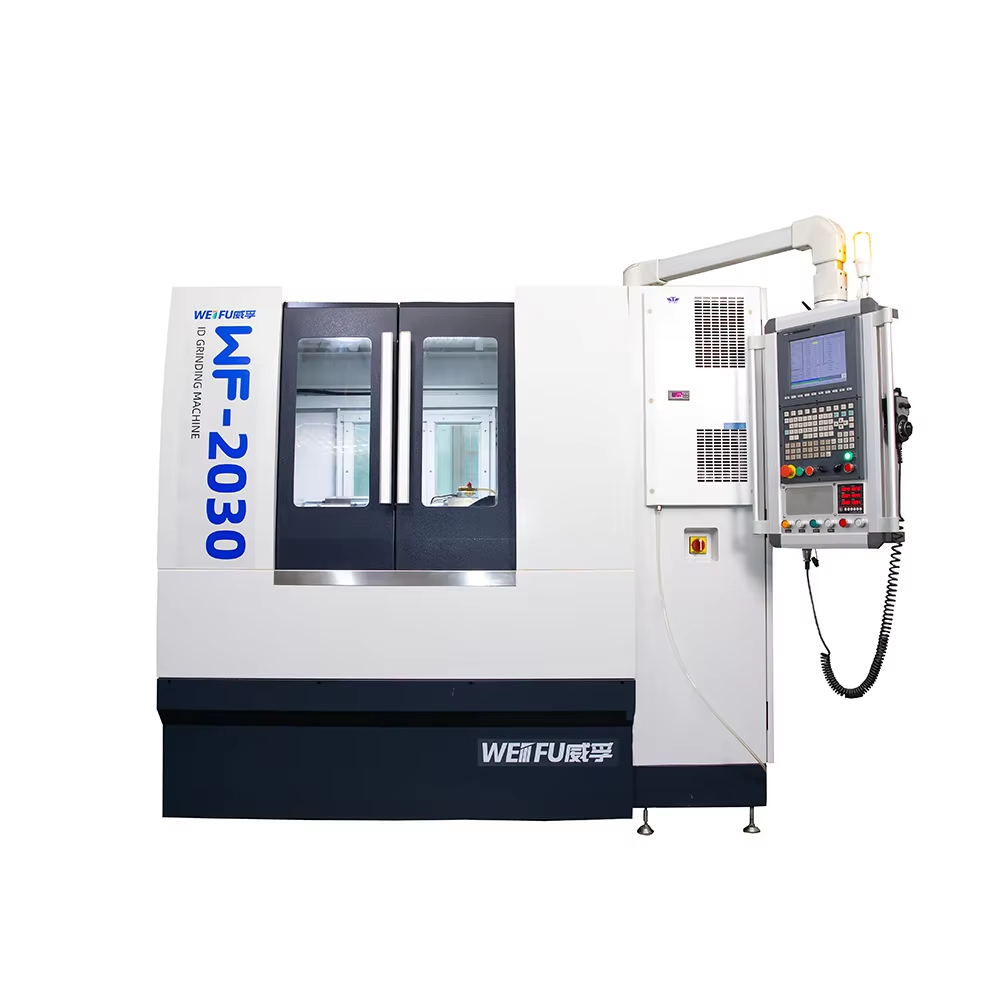
Tight Tolerances Down to ±0.5 µm on Rotating Components
Today's cylindrical grinders deliver amazing levels of dimensional accuracy when it comes to those vital rotating parts like turbine shafts and bearing races. They consistently maintain tolerances around ±0.5 micrometers (that's about 1/100th the width of a single human hair). Such tight control helps avoid those annoying vibration problems in high speed applications and can actually double the life of components in some cases. The latest CNC feedback systems keep an eye on everything from wheel infeed rates to workpiece alignment throughout the whole process. These smart systems adjust themselves automatically as temperatures change during operation. No more stopping the machine for manual measurements means continuous production runs for those really important parts used in aerospace and medical equipment. We all know what happens when there's even the smallest deviation in these applications sometimes it just doesn't end well at all.
Consistent Part-to-Part Uniformity in High-Volume Production Runs
Cylindrical grinders that are automated can maintain remarkable consistency even when producing over 10,000 units in a single batch. These machines come equipped with built-in measuring systems that check each ground part against digital specifications. When something goes off track by more than plus or minus 1 micrometer, the system automatically adjusts itself. The result? Manufacturers see roughly half the scrap rate they would get from manual grinding methods. Surface finishes stay consistently under 0.4 micrometers Ra as well. An actual case study comes from an automotive company that hit nearly 99.8% first pass success rate on transmission shafts after implementing robotic loaders alongside smart grinding software. This setup did away with the need for selective assembly completely. Labor expenses dropped around 35% too. Plus, everything gets tracked through the production process thanks to integrated data collection systems.
Delivering Exceptional Surface Finish with Reduced Post-Processing
Ra Values Below 0.2 µm on Hardened Steel Shafts, Bearings, and Pins
Cylindrical grinders can produce surface finishes below 0.2 microns Ra on hardened steel parts such as shafts, bearings, and various pins that meet strict requirements from aerospace and medical manufacturing sectors. The extremely smooth surfaces created help cut down on friction and wear when parts rotate together, which means components last longer before needing replacement and maintain their dimensions better over time. Machines built with high stiffness, along with specially designed grinding wheels and careful control of heat during operation, allow manufacturers to consistently get these results batch after batch without quality drifting away from specifications.
Eliminating Secondary Finishing Steps via Single-Pass Cylindrical Grinder Operations
Cylindrical grinders that have been optimized can finish parts completely in just one automated run instead of going through the usual steps like polishing, honing, or lapping. When manufacturers consolidate these processes, they typically see around a 30% reduction in cycle time. Labor needs drop significantly too, plus there are fewer mistakes from handling parts multiple times and less chance of damaging them during transfer between machines. These modern systems come equipped with built-in coolant delivery, monitor forces in real time, and feature adaptive CNC controls that keep both dimensions and surface finish consistent throughout production. For companies working on precision components, this means parts cost less individually, get shipped out quicker, and perform better reliably over time in their intended applications.
Enabling Multi-Feature Grinding in a Single Setup
Integrated External, Internal, Shoulder, and Taper Grinding on Advanced CNC Cylindrical Grinder Platforms
The latest CNC cylindrical grinders bring together several grinding operations in a single automated system. No more moving parts around between different machines for external, internal, shoulder work or taper grinding. This setup cuts down on all those little errors that build up when parts get clamped and aligned multiple times during production. The result? Better geometry accuracy especially noticeable on complicated parts such as stepped shafts or valve bodies with multiple diameters. Shops report big drops in cycle time because everything runs continuously without stopping. Toolmakers and mold shops seem to gain the most from these systems since they can create parts with tight tolerances and multiple features without constant manual adjustments. Most precision workshops we talk to point to reduced setup time as their main reason for investing in multi axis cylindrical grinding technology. They mention things like more consistent outputs, better machine usage rates, and easier management of day to day operations.
Boosting Throughput and Reducing Labor Costs Through CNC Automation
When it comes to cylindrical grinding, CNC automation has basically turned it into something that runs itself most of the time, allowing for continuous operations day and night without needing someone standing by all the time. The combination of automated parts handling, real time measurement checks during processing, and grinding cycles that adjust themselves on their own cuts down on wasted time and gets rid of those problems caused by tired operators. Some factories have seen their output jump around half again what it was before implementing these systems fully. A company somewhere in the Midwest actually cut their direct labor expenses by about thirty percent once everything was hooked up properly. What really matters though is how consistent results become when machines follow programmed instructions exactly every single time. This means fewer mistakes that need fixing later on, so experienced workers can spend their time making processes better, checking quality standards, and supporting engineers instead of just watching over machines doing the same thing repeatedly. All these improvements together mean machines get used more efficiently, each part ends up costing less money to produce, and whole production lines start making financial sense even when dealing with large volumes of highly precise components.
FAQ
What are the benefits of using CNC cylindrical grinders?
CNC cylindrical grinders offer micron-level precision, reduce labor costs, enhance throughput, and improve consistency in production, which is essential for high-volume operations.
How do CNC grinders ensure dimensional accuracy?
CNC grinders use advanced feedback systems and built-in measuring tools to maintain tight tolerances and adjust in real-time to temperature and alignment changes.
Can cylindrical grinders handle multiple features simultaneously?
Yes, advanced CNC cylindrical grinders can perform multiple grinding tasks such as external, internal, and taper grinding in one setup, reducing setup time and error rates.

