
 EN
EN
Core Mechanical and Structural Foundations of Cylindrical Grinder Accuracy
Machine Rigidity and Thermal Stability: Epoxy-Granite Bases and Vibration Damping for Sub-Micron Consistency
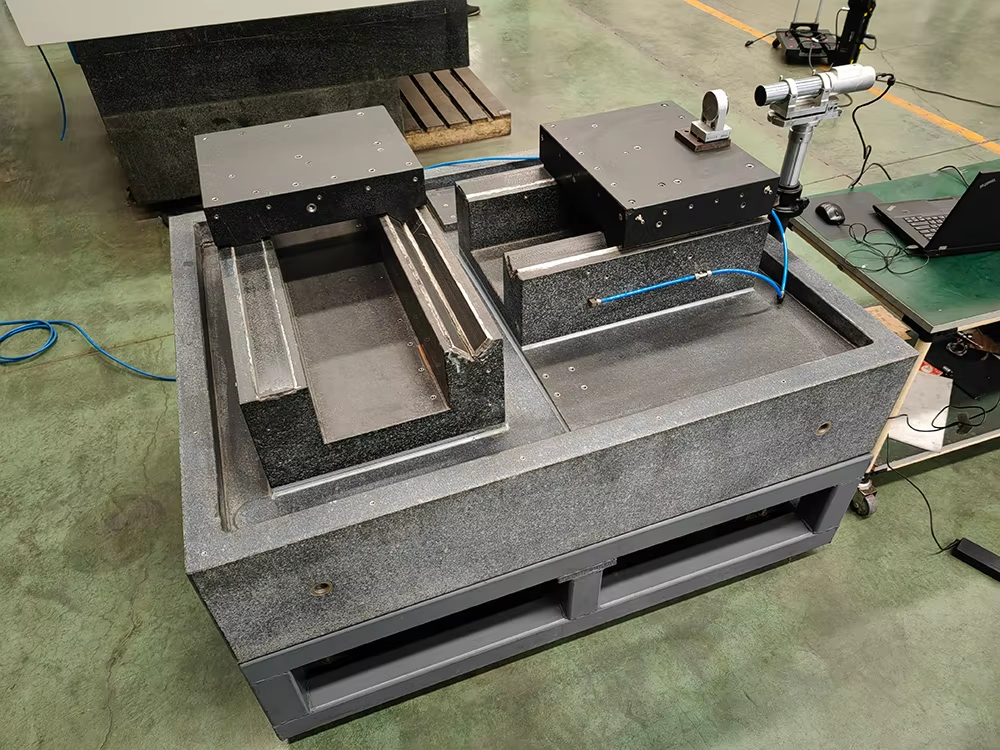
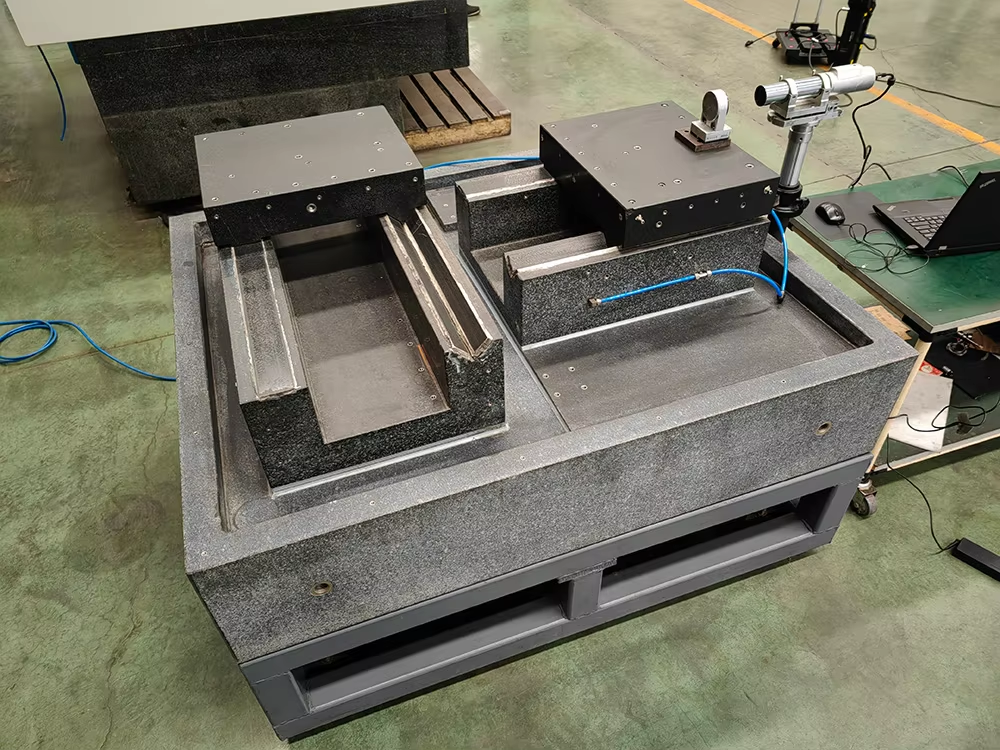
Getting down to sub-micron tolerances requires machines that are rock solid and can handle temperature changes without breaking a sweat. These days, most cylindrical grinders come with bases made from epoxy and granite composites. This combination cuts down on vibrations by about 80% when compared to traditional cast iron setups, which makes all the difference in keeping chatter at bay during those super precise grinding operations according to Machine Tool Research from last year. The way these machines are built symmetrically helps spread out heat more evenly across the system. Plus there are special coolant channels built right into them that keep things running cool within half a degree Celsius either way. Some models also feature vibration damping pads underneath that basically disconnect the machine from any shaking coming up through the floor. This stops unwanted resonance and keeps everything from warping due to heat. And let's not forget about the precision chucks that hold parts in place even when spinning at crazy speeds. They're essential for making sure nothing shifts position during the whole machining process.
Geometric Integrity: Roundness, Concentricity, and Straightness Achieved Through Precision Axis Alignment
Getting geometric accuracy right depends heavily on aligning all motion axes at the micron level. The hydrostatic guideways provide straightness down to 0.1 microns per meter. Laser calibration keeps the spindle perpendicular within just 2 arc seconds, and temperature compensated encoders catch any position drift as it happens. Together these components keep roundness errors under 0.5 microns and concentricity deviations around 1 micron from part to part. Before running anything, technicians go through strict alignment checks to confirm everything is coaxial. During production, the system constantly watches for any axis movement that might throw things off track. Combine this setup with smart feed rate adjustments, and manufacturers can maintain straightness within 0.001 mm over 100 mm lengths even when working on complicated cylindrical shapes that demand precise control throughout their entire profile.
CNC Control and Real-Time Metrology in Modern Cylindrical Grinder Systems
Sub-Micron Axis Repeatability and Dynamic Compensation via CNC Motion Control
Today's cylindrical grinders can hit around 0.1 micrometer repeatability on their axis thanks to those fancy high resolution servo motors working alongside linear encoders. The machines actually have these real time control systems that keep adjusting all day long for things like heat expansion and mechanical bending. When taking off material pretty aggressively, this setup cuts down size errors by about two thirds according to some studies published last year in the Journal of Engineering Mechanics and Machinery. Why does this matter? Well, manufacturers need this kind of precision when making parts like hydraulic cylinder rods or aircraft bearing components where specs often demand measurements within just 0.0001 inch tolerance levels.
In-Process Laser Diameter Verification and Closed-Loop Feedback Integration
This synchronization eliminates post-process inspection for 92% of high-tolerance components and consistently delivers surface finishes below 0.2 µm Ra—even when grinding hardened alloys with CBN wheels, where thermal expansion poses a key risk to dimensional stability.
Optimized Process Parameters and Advanced Abrasives for Stable High-Precision Grinding
Feed Rate, Wheel Speed, and Coolant Management for ±0.0001 Inch Tolerance Retention
Getting stable micron level accuracy really comes down to keeping those process parameters under tight control. Feed rates typically range from 0.1 to 5 mm per minute while wheel speeds should stay between 1,500 and 2,000 SFPM. These numbers help prevent workpiece deflection and keep thermal distortion at bay during operation. Coolant filtration plays a big role too. When done right, it keeps the coolant's viscosity steady and limits temperature swings to below 2 degrees Celsius, which is absolutely necessary if we want to maintain those ±0.0001 inch tolerances. Bonus benefit? These same conditions cut down on wheel loading problems and can achieve surface finishes better than 8 Ra micro inches, something manufacturers look for when quality matters most.
CBN and Diamond Wheels: Reduced Dressing Frequency, Lower Heat Generation, and Superior Surface Finish Control
Cubic Boron Nitride (CBN) and diamond abrasives offer 5–8 longer service life than conventional aluminum oxide wheels. Their superior thermal conductivity lowers grinding zone temperatures by 30–40%, enabling repeatable surface finishes below 0.2 µm Ra. Extended dressing intervals—every 50–100 parts versus 5–10—cut operational downtime while preserving geometric accuracy within ±0.0001 inches.
Workflow Efficiency and Datum Preservation Through Multi-Operation Cylindrical Grinder Capabilities
Multi operation cylindrical grinders bring together roughing, finishing work, and chamfering all in one setup which cuts down on wasted handling time by around 65 percent. What makes this really important is how it gets rid of the need for repeated fixturing. This keeps the original reference points intact and stops those annoying position shifts that happen when parts move between different machines. The whole process stays aligned because everything works from the same coordinate system. These systems can maintain positions within about 5 microns accuracy and keep dimensions stable at plus or minus 0.0001 inches even during long production runs. With CNC synchronized wheel dressing and constantly adjusting tool paths, things like bore concentricity and shoulder squareness stay accurate without anyone having to step in manually throughout the process.
FAQs
What is the advantage of using epoxy-granite bases in cylindrical grinders?
Epoxy-granite bases significantly reduce vibrations, up to 80% compared to traditional cast iron bases, enhancing machining precision by minimizing chatter.
How is geometric accuracy maintained during grinding?
Geometric accuracy is ensured through hydrostatic guideways and laser calibration, keeping the spindle and axes aligned to precision levels.
Why are CBN and diamond wheels preferred in high-precision grinding?
CBN and diamond wheels have superior thermal conductivity and extended service life, providing consistent and high-quality surface finishes.
What makes multi-operation grinders efficient?
Multi-operation grinders streamline processes by eliminating repeated fixturing, preserving datum points, and ensuring precision throughout complex operations.

