
 EN
EN
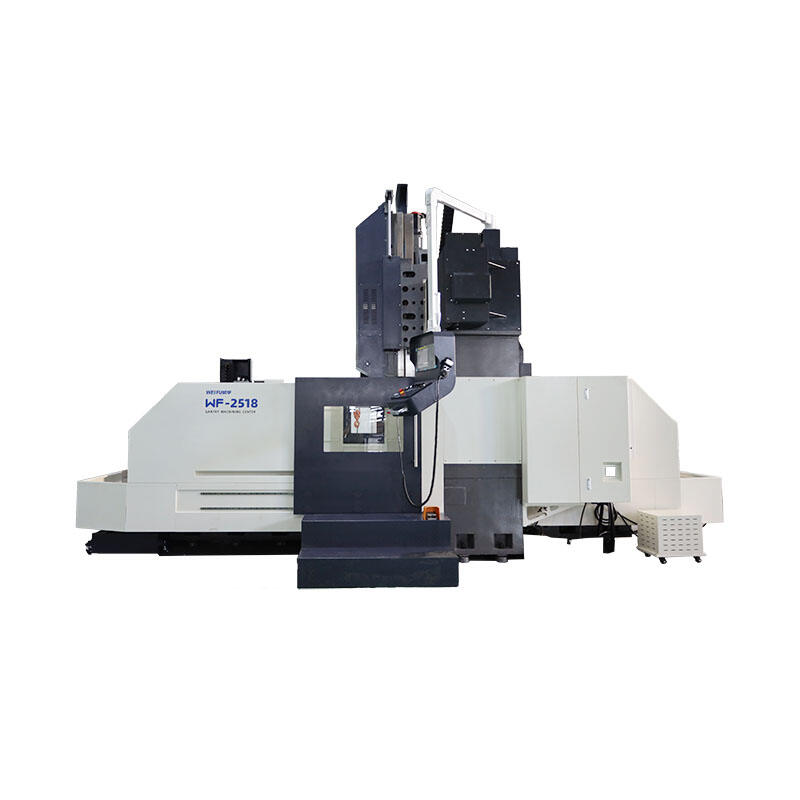
Core Structural and Kinematic Differences
Frame Architecture: Fixed Gantry Bridge vs. Vertical Column Design
The fundamental architectural distinction between a gantry machining center and a vertical machining center lies in how the machine supports the cutting head and workpiece. In a gantry machining center, the spindle travels along a fixed bridge while the workpiece remains stationary on a table that moves only in one axis. This configuration provides inherent rigidity because the gantry structure absorbs cutting forces directly—minimizing deflection under load. In contrast, a vertical machining center uses a moving column that carries the spindle, with the workpiece positioned on a moving table. The column’s cantilevered design introduces potential for flex under heavy loads, limiting its suitability for large, high-precision components.
Axis Configuration, Travel Range, and Dynamic Rigidity in Heavy-Duty Applications
Gantry machining centers achieve extended X-axis travel by moving the entire gantry along the base, Y-axis motion via spindle head movement across the beam, and Z-axis via vertical ram motion. This kinematic layout delivers expansive work envelopes without sacrificing dynamic rigidity—critical when machining aerospace monolithic parts or energy-sector turbine housings. The fixed bridge design dampens vibration and preserves positional stability during aggressive material removal. Vertical machining centers, constrained by table size and column travel limits, are better suited for smaller parts and lighter cuts. Their simpler motion chain offers less resistance to deformation under high force, resulting in reduced stiffness and shorter tool life in sustained heavy-duty operations.
Performance Comparison: Accuracy, Material Removal, and Tooling Flexibility
Positional Accuracy and Thermal Stability Under Sustained Cutting Loads
Gantry machining centers maintain superior positional accuracy during extended operations due to their symmetrical, thermally balanced bridge structure—which mitigates asymmetric heating and thermal drift. For large aerospace components requiring micron-level tolerances over multi-hour cycles, this stability is non-negotiable. Independent testing confirms gantry systems hold positional accuracy within ±0.005 mm during 8-hour continuous runs; vertical machines under comparable heavy-cut conditions often exceed 0.015 mm of thermal-induced drift.
Spindle Power, Torque Delivery, and Metal Removal Rate for Aerospace and Energy Components
Gantry machining centers accommodate higher-torque, lower-RPM spindles optimized for difficult-to-machine aerospace alloys like titanium and Inconel. Their structural rigidity enables full utilization of spindle power during deep slotting, pocketing, and face milling of hardened steels—without chatter or deflection. When processing thick-section energy components such as turbine housings, gantry platforms deliver material removal rates (MRR) 15–25% higher than similarly priced vertical machines. This performance edge stems not just from raw power, but from consistent force absorption and stable tool engagement.
Application Fit: When a Gantry Machining Center Is the Optimal Choice
Large-Format, High-Rigidity Workpieces (e.g., Wind Turbine Housings, Railcar Frames)
For workpieces exceeding a vertical machining center’s capacity in size or weight—a common requirement in wind energy, rail, and heavy equipment manufacturing—a gantry machining center is the optimal solution. Its fixed bridge and moving table provide exceptional rigidity across long travel distances, ensuring dimensional stability during milling of multi-ton wind turbine housings or railcar frames. The open architecture also supports multi-surface machining in a single setup, eliminating repositioning errors and reducing overall cycle time.
Low-Mix, High-Value Production Requiring Minimal Setup and Exceptional Surface Integrity
In low-mix, high-value production—such as aerospace structural ribs or energy-sector base plates—the gantry machining center’s advantages extend beyond throughput. Its large work envelope allows simultaneous fixturing of multiple part variants, slashing changeover time. The thermally stable, symmetric frame sustains consistent surface finishes across long, uninterrupted cuts—reducing post-machining finishing requirements. Though capital investment is higher, the combination of lower rework rates, extended tool life, and reduced per-part machining time yields a stronger total cost-per-component profile over the machine’s lifecycle.
Operational and Economic Considerations
Footprint, Foundation Requirements, Automation Integration, and Total Cost of Ownership
Gantry machining centers require significantly more floor space—typically 30–40% greater than vertical counterparts—due to their bridge-style framework. This demands reinforced concrete foundations capable of supporting 50–100 tons to preserve geometric stability during heavy cutting. Automation integration is notably more flexible: the open gantry architecture accommodates robotic loading/unloading and pallet shuttle systems without spatial compromise or costly retrofitting. While initial investment runs 20–35% higher than vertical machines, gantry platforms reduce per-part costs by 15–25% in high-volume, large-component production—driven by faster MRR and fewer setups. Maintenance reflects the platform’s robustness: annual spindle upkeep averages $18k versus $12k for vertical centers, but service intervals are 30% longer.
| Factor | Gantry Machining Center | Vertical Machining Center |
|---|---|---|
| Avg. Footprint | 40–60 m² | 25–40 m² |
| Foundation Strength | 100–150 MPa | 50–80 MPa |
| Automation Readiness | High (open architecture) | Moderate (space constraints) |
| 5-Year TCO | $1.2M–$1.8M | $850k–$1.3M |
Frequently Asked Questions
What are the main advantages of gantry machining centers over vertical machining centers?
Gantry machining centers offer superior rigidity, extended work envelopes, and better vibration damping, making them ideal for heavy-duty applications and large components like turbine housings and railcar frames.
Are gantry machining centers suitable for small parts?
While gantry machining centers excel with large-scale parts, their higher initial investment and required footprint make them less cost-effective for small parts compared to vertical machining centers.
What are the foundation requirements for gantry machining centers?
Gantry machining centers demand reinforced concrete foundations with strength ratings between 100–150 MPa to support their heavy framework during cutting operations.

