
 EN
EN
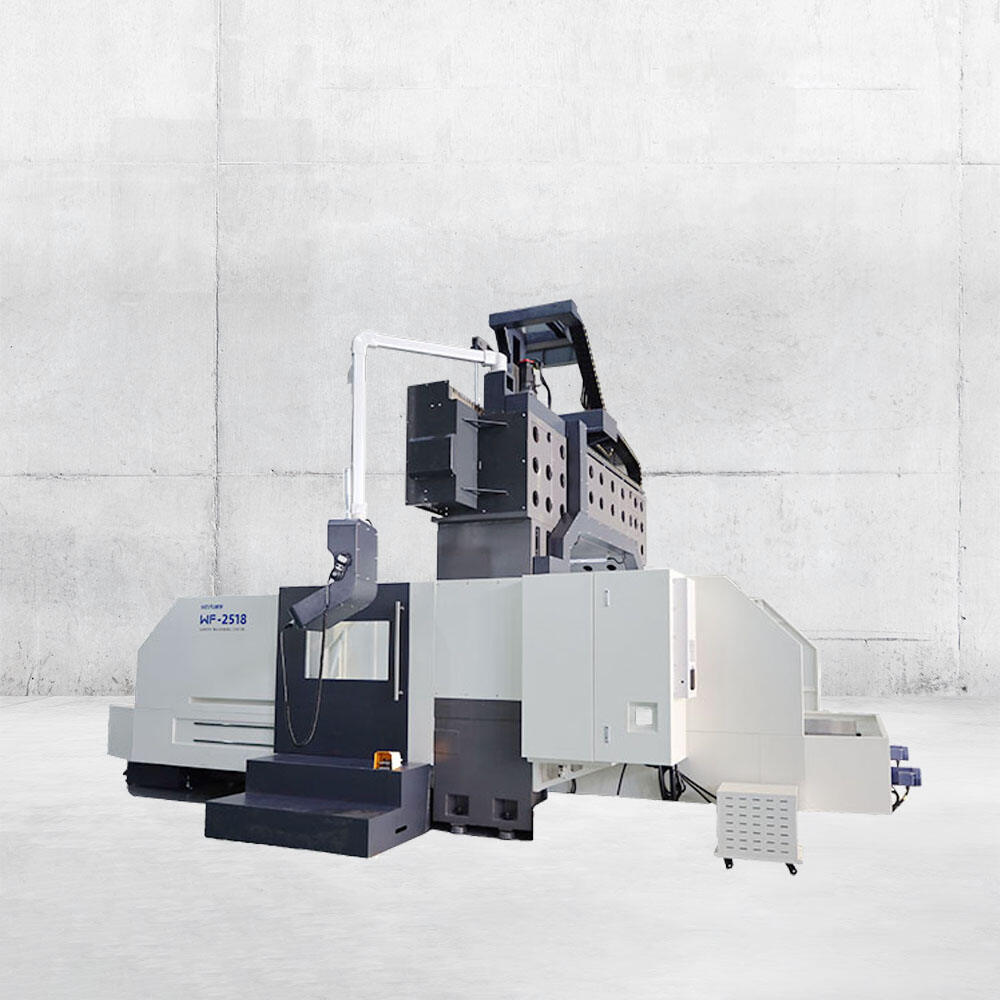
Structural Advantages of the Gantry Machining Center for Automotive Manufacturing
High Rigidity and Long-Travel Precision for Large-Scale Body Panels and Chassis Components
The dual-column and crossbeam structure of the gantry machining center delivers exceptional rigidity—critical for machining large, thin-walled automotive components like body panels and chassis frames. Unlike vertical machining centers (VMCs) with single-column designs, this symmetrical configuration evenly distributes cutting forces, minimizing deflection during high-load operations. For long-travel applications—often exceeding 5 meters—this structural stability ensures consistent dimensional accuracy within ±0.02 mm across the full work envelope. The stationary workpiece design further enhances stability, enabling uninterrupted machining of oversized parts that exceed the capacity of moving-table machines. As a result, rework on large stamping dies is significantly reduced, and assembly gaps shrink by up to 40% compared to conventional methods.
Thermal Stability and Vibration Damping During High-Speed, Heavy-Duty Cutting
Aggressive material removal on hardened steels and cast irons—common in engine blocks and transmission housings—generates substantial heat and vibration. Gantry machining centers counteract these challenges through integrated thermal compensation systems and advanced vibration-damping technologies. Their massive cast iron base provides inherent thermal stability, limiting thermal drift to less than 10 µm/m°C—essential for holding tight bore tolerances over extended cycles. Active vibration suppression systems neutralize harmonic frequencies generated during high-speed milling (up to 20,000 RPM), improving surface finish on critical features to Ra < 0.8 µm—a 35% gain over non-damped alternatives. This enables uninterrupted heavy-duty cutting runs exceeding 12 hours while maintaining positional accuracy within 50 µm, directly lowering scrap rates in high-volume production.
Single-Setup Multi-Process Machining with the Gantry Machining Center
5-Axis Simultaneous Machining for Complex Automotive Frames and Structural Parts
Automotive frames, battery trays, and structural cross-members require complex geometries and micron-level precision. A 5-axis gantry machining center achieves this by machining compound-angle features—such as suspension mounts and flanged interfaces—in a single clamping. Eliminating multiple setups removes cumulative positioning errors and shortens lead times: a single program can replace three separate operations involving drilling, contouring, and deburring. This reduces cycle time by 30–40% for typical structural components while sustaining dimensional repeatability within ±5 µm.
Integrated Milling, Drilling, and Tapping Eliminates Secondary Operations
Beyond multi-axis contouring, the gantry machining center consolidates milling, drilling, and tapping into one seamless process. Leveraging a high-torque spindle and rapid automatic tool changer, it transitions between operations without manual intervention. This integration eliminates dedicated secondary stations—freeing floor space and reducing labor costs. For engine blocks and transmission housings, all features are machined relative to a single datum, cutting total processing time by up to 25% and lowering rework rates. The result is higher OEE, faster throughput, and uncompromised accuracy.
Quantifiable Efficiency Gains Enabled by the Gantry Machining Center
Cycle Time Reduction, OEE Improvement, and Enhanced Dimensional Consistency
The gantry machining center delivers measurable, production-grade efficiency gains. Consolidating large-component machining into a single setup cuts cycle times by 30–40%, directly boosting Overall Equipment Effectiveness (OEE) by reducing idle time and eliminating re-fixturing errors. Its rigid structure and real-time thermal compensation sustain tight tolerances across long production runs—minimizing dimensional drift. One Tier 1 supplier reported a 33% cycle time reduction for chassis frames (from 12 to 8 minutes), an OEE increase from 75% to 88%, and a 60% drop in scrap—driven primarily by near-elimination of positioning errors. Dimensional variation fell by 50%, ensuring part-to-part consistency and raising effective production capacity. These outcomes translate into lower per-part costs and stronger ROI for high-volume automotive manufacturing.
Smart Integration Trends: Digital Twin and Adaptive Control in Gantry Machining Center Workflows
Modern automotive manufacturing increasingly relies on digital twin technology to create real-time virtual replicas of physical machining processes. Sensor networks on the gantry machining center capture over 20 parameters—including cutting force, spindle temperature, and vibration—feeding data into a dynamic digital model. This enables operators to monitor, simulate, and optimize performance without interrupting production. According to research published in the CIRP Annals, predictive maintenance enabled by digital twins can improve overall equipment efficiency by 25% and reduce unplanned downtime by 40%.
Adaptive control systems extend this intelligence by using feedback from the digital twin to make autonomous, real-time adjustments. When the twin detects tool wear or thermal expansion, it dynamically modulates feed rates, spindle speed, and coolant flow—achieving micron-level error compensation. In practice, during chassis frame machining, the system continuously compares actual results against the original CAD model and corrects tool paths on-the-fly, preserving dimensional consistency across every part. Yield rates exceed 98%, and tool life extends up to 60%.
Implementation follows three core steps: (1) install IoT-enabled sensors to capture machine-state data; (2) build a behaviorally accurate digital model using validated simulation software; and (3) establish bidirectional communication between the twin and the CNC control system. While upfront investment and workforce upskilling present initial hurdles, the long-term benefits—reduced downtime, improved first-pass yield, and accelerated cycle times—deliver compelling ROI. As cloud-based platforms mature, even small-to-medium enterprises are adopting these capabilities, accelerating the shift toward autonomous, data-driven machining across the automotive supply chain.
FAQ
What is the main advantage of using a gantry machining center in automotive manufacturing?
The gantry machining center offers high rigidity, thermal stability, and the ability to machine large, thin-walled automotive components with exceptional precision. Its design minimizes deflection and enhances dimensional accuracy over long travel lengths, making it ideal for oversized parts.
How does digital twin technology benefit gantry machining centers?
Digital twin technology creates virtual replicas of machining processes, enabling operators to monitor and optimize performance in real time. This technology improves efficiency, reduces downtime, and enhances predictive maintenance capabilities.
Can a gantry machining center handle multi-process operations?
Yes, gantry machining centers consolidate milling, drilling, and tapping into one seamless process, eliminating the need for secondary operations and increasing overall efficiency.
What are the quantifiable production gains from using a gantry machining center?
Using a gantry machining center can reduce cycle times by 30–40%, improve OEE, lower scrap rates, enhance dimensional consistency, and increase effective production capacity.
What are the challenges of implementing digital twin and adaptive control systems?
Initial costs and workforce upskilling are the primary challenges. However, the long-term benefits include reduced downtime, improved first-pass yield, and faster cycle times, offering a strong ROI.
Table of Contents
- Structural Advantages of the Gantry Machining Center for Automotive Manufacturing
- Single-Setup Multi-Process Machining with the Gantry Machining Center
- Quantifiable Efficiency Gains Enabled by the Gantry Machining Center
- Smart Integration Trends: Digital Twin and Adaptive Control in Gantry Machining Center Workflows
- FAQ

