
 EN
EN
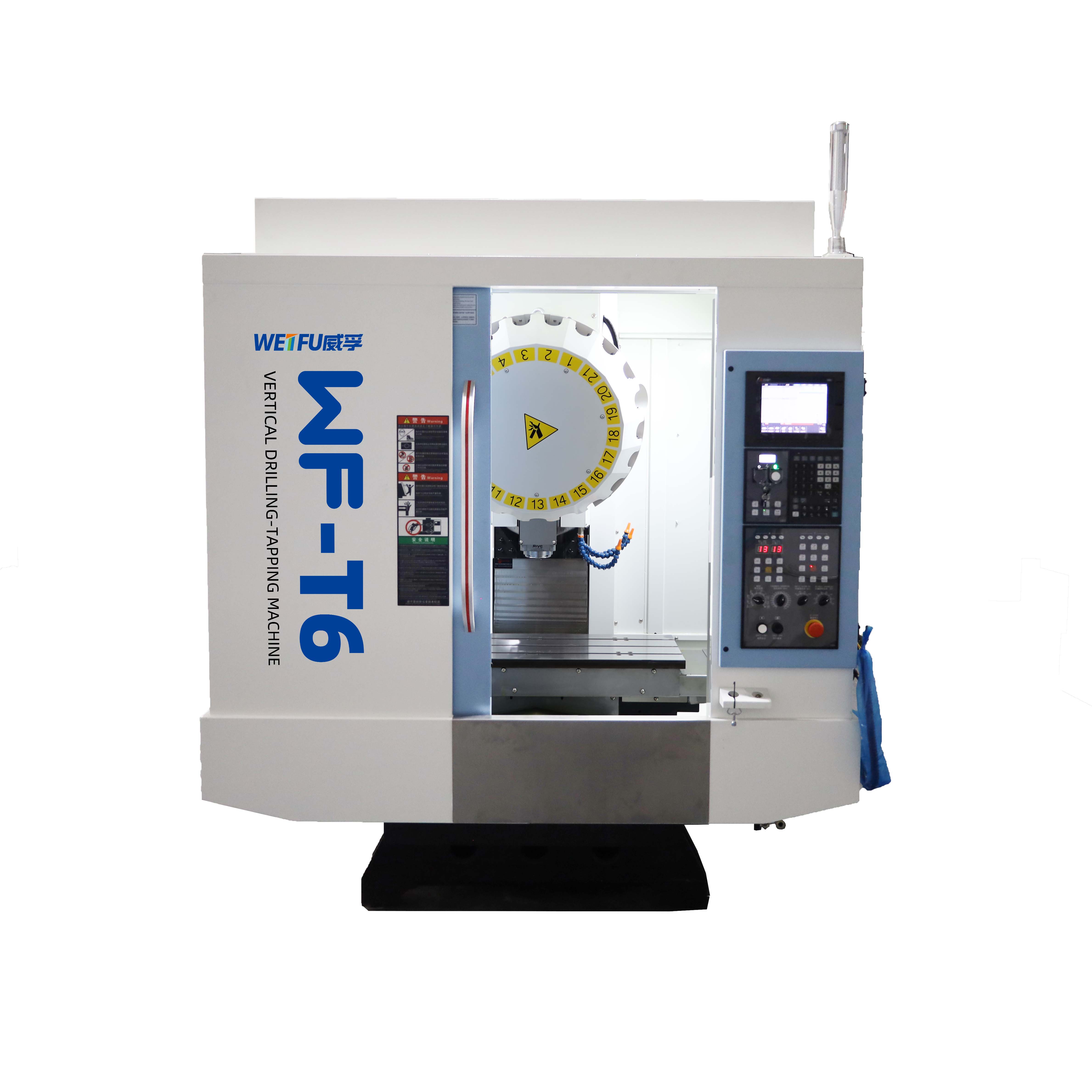
Precision Engineering: How Milling Machines Deliver Tight Tolerances
The Mechanics of Rotating Cutting Tools in Shaping High-Accuracy Components
The precision of milling machines comes from how the spinning cutting tools interact with the material being worked on. Carbide end mills, those face mills we see so often, and various types of drills chip away at material bit by bit sometimes down to just 0.001 millimeters. The sturdy frames of these machines help keep everything stable when the cutting force starts getting intense. Take modern CNC machines for instance they can hold their spindle alignment within about 2 microns. That matters a lot because if the tool starts to wobble even slightly, it throws off the whole operation. This kind of accuracy is absolutely essential in industries like aerospace where getting measurements right isn't just good practice it's literally a matter of safety.
Achieving Micron-Level Tolerances and Superior Surface Finish
Modern milling setups typically operate at spindle speeds ranging from around 15,000 to 30,000 RPM, with feed rates adjusted within a tight margin of plus or minus 0.0025 mm. The flood coolant system plays a critical role here too, helping control heat buildup that can warp materials and wear down cutting tools faster than normal. This keeps production running smoothly without unexpected interruptions. For machines fitted with linear scale feedback technology, surface finish quality reaches remarkable levels, often dropping below 0.4 microns Ra. That's actually about half as rough as what comes out of traditional manual milling operations. Such fine finishes are absolutely necessary when manufacturing parts for things like surgical implants or aircraft engine components where even microscopic imperfections simply won't cut it.
Manual vs. CNC Milling: Comparing Precision Outcomes and Consistency
Experienced machinists working with manual mills typically hit around ±0.05 mm tolerance levels, though CNC machines consistently deliver better results with tolerances down to ±0.01 mm over multiple production batches. The automated tool changer feature takes away all those headaches about picking the right cutting bit, and the closed loop system actually senses when something starts going off track and fixes it as it happens. Factory owners have seen their scrap pile shrink dramatically after switching operations to CNC for precision components. One manufacturer mentioned nearly a 90-odd percent drop in wasted material once they made the switch from traditional methods to computer controlled machining for parts that need exact measurements.
CNC Control and Automation: The Core of Accurate Milling Operations
How CNC Programming Ensures Repeatable and Error-Free Machining
Computer Numerical Control (CNC) milling machines take digital designs and turn them into actual parts through programmed G-code commands. The latest machining efficiency studies show that when shops switch from manual setup to automated programming, they cut down on mistakes made by people by around 80%. Modern software does something pretty cool too it adjusts on the fly for things like tool bending and material tension during cutting. This matters a lot for companies making airplane parts who need to hit super tight specs every single time. These days, many aerospace manufacturers can reliably produce components within just plus or minus 0.005 millimeters across entire production runs.
Optimizing Spindle Speed, Feed Rate, and Toolpath for Accuracy
Getting good precision means finding the right balance between spindle speeds ranging from around 8,000 to 24,000 RPM and adjusting feed rates based on what material we're working with and how the tools are shaped. Take aluminum for example it tends to give the best surface finish when running at approximately 18,000 RPM while keeping the feed rate around 0.15 mm per tooth. The newer CAM software out there creates much smoother tool paths these days, which helps avoid those sudden direction shifts that cause vibrations. According to recent industry reports, this approach cuts down on accuracy issues caused by vibrations by almost half compared to older methods.
High-Speed and Adaptive Machining Techniques for Enhanced Precision
Modern 5 axis CNC machines have gotten pretty smart these days, using things like trochoidal toolpaths to spread out tool wear instead of letting one spot get all worn down. When manufacturers pair high speed spindles with good quality carbide tools, they can actually remove materials around 25 percent faster than older techniques, but still keep those super tight tolerances at the micron level. The really cool part comes from real time sensors built into the system that watch for heat expansion happening in the machine itself. These sensors then tweak the positioning automatically. Some shops report this makes a huge difference, especially when making turbine blades where getting the geometry right matters so much. One manufacturer saw their accuracy jump by about 30% after implementing this kind of thermal compensation system.
Multi-Axis Machining: Enabling Complex Geometries with Precision
Modern manufacturing demands components with complex curves, undercuts, and contoured surfaces—challenges beyond the reach of traditional 3-axis milling. Multi-axis machining meets these requirements by enabling simultaneous tool movement across four or five axes, making it indispensable in aerospace, medical, and automotive sectors.
Capabilities of 4-axis and 5-axis milling machines in intricate part production
Four axis milling brings rotation around the X axis (known as the A axis) which means manufacturers can reach multiple sides of a part without having to constantly reposition it during machining. This makes production much more accurate and efficient when working on complex components such as camshafts and valve bodies. Five axis systems take this one step further by adding another rotational axis either B or C depending on machine design. With these extra degrees of freedom, cutting tools can approach workpieces from almost any direction. For turbine blade manufacturing especially important since many blades have those complex curved airfoil shapes. These advanced machines allow entire blades to be machined in just one setup while keeping tight tolerances around plus or minus 0.005 millimeters and producing surface finishes under 0.4 micrometers Ra. The industry standard for precision parts is getting tighter all the time.
Reducing setup changes and improving accuracy through multi-axis integration
When working with 3-axis milling, every time someone has to manually reposition the part, small alignment errors start adding up. These errors typically range between 0.02 and 0.05 mm for each setup according to some research from the Journal of Manufacturing Systems back in 2022. The good news is that multi-axis machines basically solve this problem because they combine tilting, rotating, and pivoting movements all within one continuous process. What does this mean practically? Well, instead of going through three separate setups on a traditional 3-axis machine, manufacturers can often get away with just one setup on a 5-axis system. Production times drop anywhere from 35% down to even 60%, while dimensional accuracy improves by roughly 70% in most cases. For parts where precision literally means life or death – think medical implants or those critical brackets used in aircraft construction – having this kind of accuracy isn't just nice to have, it's absolutely essential.
| Multi-Axis Advantage | Industry Impact |
|---|---|
| Reduced setups | 40–65% fewer alignment errors |
| Angular tool access | 85% faster machining of contoured surfaces |
| Continuous tool engagement | 30% longer tool life in hardened alloys |
By minimizing human intervention and leveraging programmable toolpaths, multi-axis milling ensures repeatable precision—even for parts with compound angles or hybrid organic-mechanical designs.
Critical Applications in Aerospace, Medical, and Industrial Manufacturing
Milling Machine Use in Aerospace and Medical Devices Requiring High Reliability
Modern milling tech in aerospace makes turbine blades, landing gear components, and structural parts for airframes with tolerances below 5 microns. These tight specs are what keep aircraft performing reliably even when pushed to their limits during flight. Over in medical manufacturing, CNC machines craft titanium implants that need to be biocompatible. The surface finish on these implants reaches around Ra 0.4 microns, which helps them integrate better with bone tissue while maintaining sterility standards. The demand for custom orthopedic and dental devices has really taken off lately. Patients want things made specifically for their anatomy, and this requires positional accuracy within about ±0.01 mm. Because of this trend, the medical CNC sector saw growth of roughly 22% last year alone according to industry reports.
Case Study: Precision Component Workflow Optimization
One major manufacturing firm recently switched to 5 axis simultaneous machining technology, which cut down on setup changes by around two thirds. They managed to hit ISO 2768 fh tolerances in nearly all their production runs, about 98% actually. When they got rid of those time consuming manual repositioning steps, something interesting happened. The scrap rate for fuel system parts dropped dramatically from 8.2 percent down to just 0.9 percent over the course of half a year. After running parts through coordinate measuring machines, they found out the dimensional accuracy was sitting at plus or minus 2 microns. That's better than what AS9100 requires for those really important aerospace components where failure just isn't an option.
FAQ
What is the advantage of using CNC machines over manual milling in terms of precision?
CNC machines can achieve tighter tolerances consistently, around ±0.01 mm, while manual mills typically reach about ±0.05 mm. This results in more accurate and repeatable outcomes.
How do multi-axis machines improve milling precision?
Multi-axis machines reduce the need for repositioning parts, minimizing alignment errors and significantly enhancing accuracy by combining complex movements in one setup.
Why is precision important in aerospace and medical manufacturing?
In aerospace, precise parts are crucial for safety and performance, while in medical fields, high precision ensures biocompatibility and proper functionality of implants.

