
 EN
EN
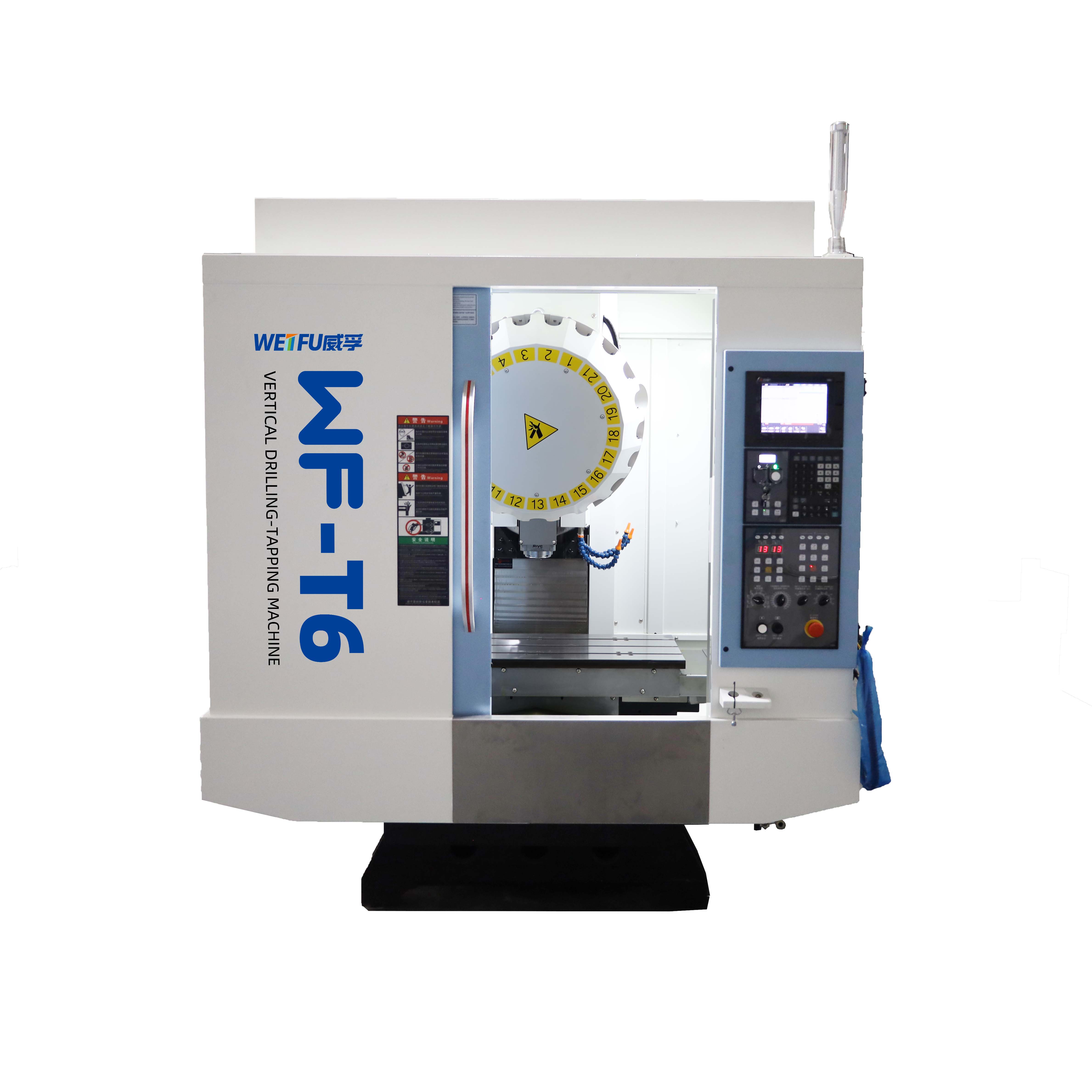
Types of CNC Milling Machines: Vertical, Horizontal, and 5-Axis Systems
How Machine Configuration Impacts Cutting Efficiency and Workpiece Accessibility
Vertical CNC milling machines have their spindles positioned upright, which makes these machines great for precise operations including drilling and face milling jobs. They take up less space on the shop floor, so changing tools becomes much easier, plus they handle smaller parts quite well. Horizontal mills are different though since their spindle runs alongside the workpiece. These types perform better for tougher jobs such as cutting slots or grooves into big auto parts. The way these machines are set up actually reduces vibrations when making deeper cuts, resulting in smoother finishes around 25 percent better than what vertical systems can achieve according to some industry reports from last year.
5-axis systems integrate three linear (X, Y, Z) and two rotational axes (A/B/C), enabling simultaneous multi-angle machining. This eliminates the need for manual repositioning, reducing setup time by 40% when producing complex geometries such as turbine blades.
| Machine Type | Workpiece Size Capacity | Optimal Use Cases | Material Removal Rate (MRR) |
|---|---|---|---|
| Vertical CNC Mills | 1.5 m³ | Prototyping, flat surface work | 500–800 cm³/min |
| Horizontal CNC Mills | 4 m³ | High-volume production, deep cuts | 1,200–1,800 cm³/min |
| 5-Axis CNC Mills | 2 m³ | Aerospace components, complex contours | 600–1,000 cm³/min |
Case Study: Aerospace Component Manufacturing Using 5-Axis CNC Milling at Wuxi Weifu International Trade Co Ltd
A leading aerospace supplier reduced cycle time by 35% through the adoption of 5-axis milling for titanium wing brackets. Simultaneous five-axis movement enabled undercut machining without secondary setups, maintaining tolerances within ±0.005 mm. Hydraulic workholding minimized vibration during high-speed roughing at 12,000 RPM, extending tool life by 18% over conventional 3-axis methods.
Selecting the Right Milling Machine Based on Production Requirements
- Volume: Horizontal mills process up to three times more parts per hour than vertical systems in mass production environments.
- Complexity: 5-axis machines reduce operational setups by 75% for components with angled or compound surfaces.
- Size: For workpieces exceeding 2.5 meters in length, horizontal mills offer superior support and stability.
In mixed-production settings, hybrid 5-axis vertical mills now allow changeovers under 30 minutes between prototype development and full-scale runs, thanks to modular fixture systems.
Advanced Milling Techniques: High-Speed, Trochoidal, and High-Feed Machining
Principles of Chip Formation and Cutting Dynamics in High-Performance Milling
When it comes to precision work, high speed milling really shines because it gets those chips forming just right through better control of how the tool engages with the material plus improved heat management. Take trochoidal milling for instance. This technique follows spiral paths that keep chip thickness pretty much the same across cuts. According to some recent research from the Machining Institute back in 2023, this can cut down on cutting forces by around 35% compared to what we typically see with older methods. What makes this so good? Well, it helps prevent tools from bending too much and stops excessive heat from building up something that matters a lot when working with tough materials like hardened steel or those special aerospace alloys. And then there's high feed milling which builds on these improvements. Instead of going deep into the material, it takes shallow passes at much higher speeds. The Advanced Manufacturing Report noted last year that this approach lets manufacturers remove material about 50% quicker than regular roughing operations. Makes sense why shops are adopting these techniques more often nowadays.
Case Study: Extending Tool Life by 40% with Trochoidal Milling in Hardened Steel
An automotive supplier implemented trochoidal milling for transmission components made from AISI 4140 steel. By limiting radial engagement to 15% and increasing feed rates to 450 IPM, tool life rose from 120 to 168 parts per edge. The adjustment lowered machining costs by $18 per component while achieving surface finishes below 1.6 µm Ra.
Integrating High-Feed Milling into Roughing Cycles for Maximum Material Removal
Cutters designed for high feed rates and featuring 45 degree lead angles work really well for slotting and pocketing tasks, often taking out around two thirds of the material right from the first roughing pass. A recent test at a manufacturing facility showed that when these tools were paired with adaptive feed control systems, production time for aluminum die casting molds dropped by nearly a quarter according to findings published in Precision Machining Journal last year. Most experienced machinists rely on chip thinning math to find the sweet spot between feed rate and depth settings. This helps keep tools from getting overloaded while still maintaining that fast material removal pace that shops crave for efficiency.
Optimizing Milling Parameters and Tool Path Strategies for Peak Performance
Balancing Speed, Feed, and Depth of Cut for Optimal Results
Getting the most out of milling operations really comes down to getting those three main parameters right together cutting speed measured in SFM, feed rate in inches per tooth, and how deep we're cutting into the material. Push too hard when working with tough stuff like 60 HRC steel and tools just snap or break apart completely. But if we play it too safe all the time, machines sit idle longer than they need to which costs money. Some research from last year showed something interesting though. When shops fine tuned their cutting parameters for titanium parts used in aircraft manufacturing, they managed to boost how much material gets removed during each operation by around 22 percent without wearing down tools any faster than usual. The latest CAM programs have started incorporating real time monitoring of what's happening at the spindle. This lets operators tweak settings mid operation as soon as the system detects changes in material hardness throughout different sections of workpieces.
Case Study: Boosting Productivity by 30% in Aluminum Die-Casting Mold Production
A manufacturer achieved a 30% reduction in cycle time for high-volume aluminum die-casting mold production by implementing the following optimizations:
- Speed: Increased spindle RPM from 15,000 to 18,000 using ceramic-coated end mills
- Feed: Raised chip load from 0.08 mm/tooth to 0.12 mm/tooth
- Tool Paths: Adopted trochoidal strategies for intricate cooling channels
These changes reduced non-cutting airtime by 40% while maintaining dimensional accuracy within ±0.01 mm across more than 500 mold cavities.
Using CAD Integration and Simulation Software to Predict Efficient Tool Paths
Modern simulation tools predict tool deflection with up to 5-micron accuracy, enabling pre-production refinement of tool paths. Key capabilities include:
| Software Capability | Impact on Efficiency |
|---|---|
| Collision Detection | Eliminates 92% of tool crashes (MachineryLab 2024) |
| Heat Map Analysis | Reduces air cutting by 35% |
| Adaptive Stepover | Extends tool life by 28% in hardened steels |
By leveraging digital twin technologies, manufacturers achieve first-pass success rates above 95%, even in demanding 5-axis applications.
Automation, IoT, and Future Trends in Milling Machine Technology
Enabling Predictive Maintenance Through IoT-Connected CNC Machines
Modern milling machines equipped with IoT technology can track vibrations, monitor temperatures, and assess spindle loads as they happen, giving manufacturers a heads up about parts wearing down anywhere from ten to fourteen days ahead of time. According to the Machinery Efficiency Report for 2023, this kind of foresight cuts down unexpected machine stoppages by around 23 percent because it sends out automatic warnings when bearings need replacing or when lubrication service is due. A major car parts manufacturer actually cut their maintenance expenses by nearly one third once they started installing these edge computing sensors onto their CNC machines. These smart devices kick off work orders automatically whenever they detect tools deflecting beyond safe limits during operation.
Robotics and Unattended 24/7 Milling Operations at Industrial Scale
Lights out machining has become possible thanks to robotic automation, especially when dealing with complicated parts such as turbine blades. These six axis robots can manage workpieces ranging from 300 to 500 pounds while maintaining a repeatability rate of plus or minus 0.004 inches. They keep chips moving continuously even during those long periods when nobody is watching at night. Take one plant in the Midwest that makes parts for airplanes. After implementing robotic pallet changers there, they saw their production go up by almost half. The system swaps out these big 48 inch aluminum frames every single minute and a half, all while the machine keeps spinning right along without missing a beat.
The Rise of AI-Driven Self-Learning CNC Systems and Sustainable Machining
Modern CNC systems that can optimize themselves use machine learning based on lots of real world operation data to tweak things like feed rates, cutting speeds, and coolant delivery as they work. The smart controllers actually cut down on energy usage somewhere between 19% and 28%, all while keeping those surface finishes under 32 micro inches Ra. Looking at sustainability efforts across Europe, three different manufacturing sites managed to run their milling processes without producing any carbon emissions. They did this by implementing power saving algorithms that adapt automatically and setting up systems where cutting fluids get reused in a closed loop instead of being disposed after one use.
Frequently Asked Questions (FAQ)
What are the main types of CNC milling machines?
The main types of CNC milling machines are Vertical CNC Mills, Horizontal CNC Mills, and 5-Axis CNC Mills.
What are the optimal use cases for each type of milling machine?
Vertical CNC Mills are best for prototyping and flat surface work, Horizontal CNC Mills are ideal for high-volume production and deep cuts, and 5-Axis CNC Mills are suited for aerospace components and complex contours.
How do advanced milling techniques like trochoidal milling improve efficiency?
Trochoidal milling follows spiral paths for consistent chip thickness, reducing cutting forces by approximately 35% and improving precision for tough materials like hardened steel.
How does IoT enhance predictive maintenance for CNC machines?
IoT allows real-time tracking of vibrations, temperatures, and spindle loads, providing advance warnings about wear and tear to prevent unexpected stoppages.
Table of Contents
- Types of CNC Milling Machines: Vertical, Horizontal, and 5-Axis Systems
- Advanced Milling Techniques: High-Speed, Trochoidal, and High-Feed Machining
- Optimizing Milling Parameters and Tool Path Strategies for Peak Performance
- Automation, IoT, and Future Trends in Milling Machine Technology
- Frequently Asked Questions (FAQ)

