
 EN
EN
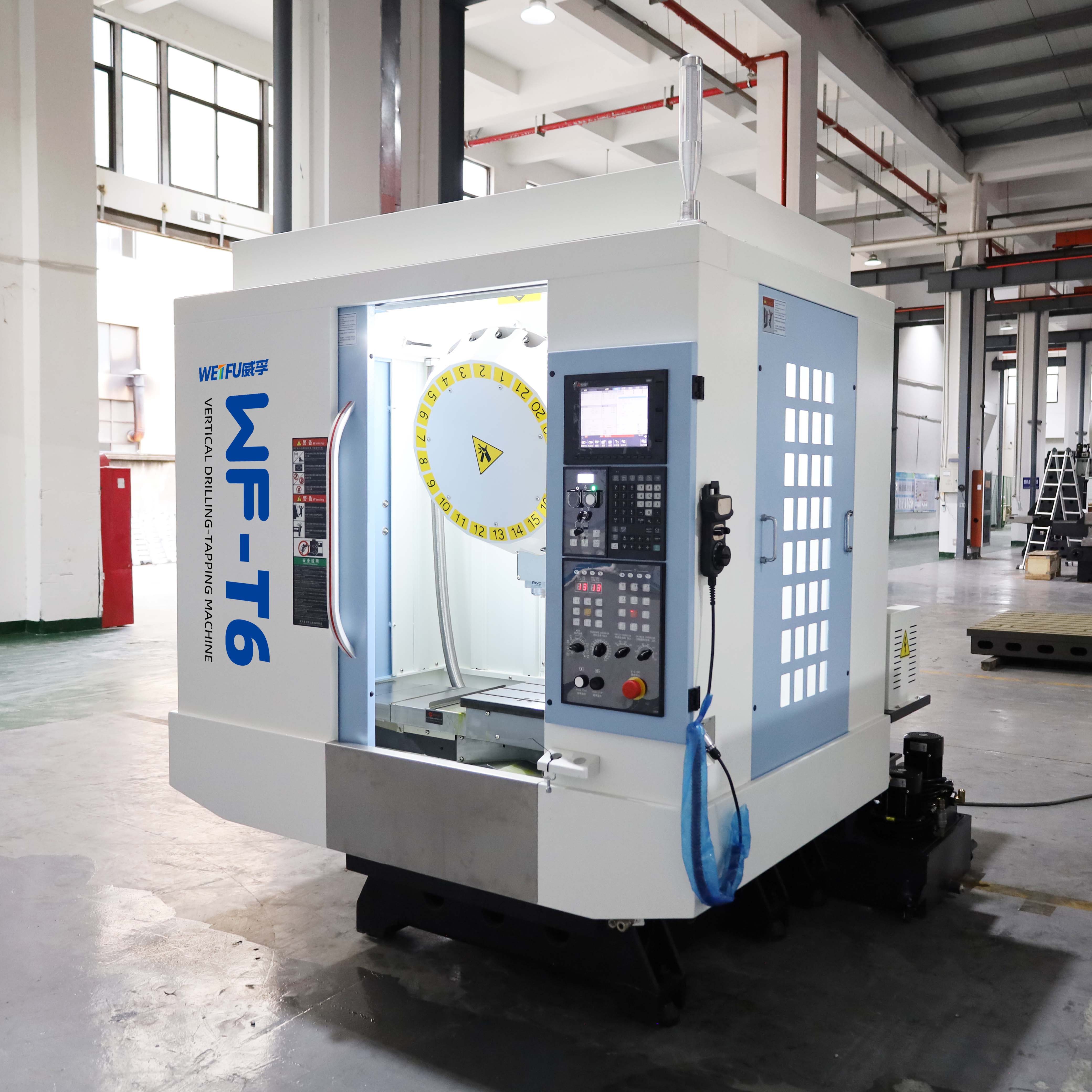
Unmatched Precision and Consistency in CNC Milling
Computer Numerical Control (CNC) milling machines deliver precision unmatched by manual methods, achieving tolerances as tight as ±0.001mm (0.00004 inches) for critical applications like aerospace components and medical implants. This micron-level accuracy minimizes post-processing, ensures seamless assembly of complex parts, reduces waste, and boosts production efficiency across industries.
How CNC Machining Reduces Part Variability Through Automation
By eliminating human intervention in repetitive tasks, CNC systems produce identical components across thousands of cycles. Advanced toolpath algorithms and servo-driven controls maintain positional accuracy within 2 microns, even during 24/7 operations. A 2023 manufacturing survey found automated milling machines reduced dimensional deviations by 89% compared to manual machining.
Case Study: Achieving ±0.001mm Tolerance in Aerospace Components
A leading manufacturer recently produced turbine blade mounts requiring <1µm surface roughness using 5-axis CNC mills with laser-assisted calibration. Real-time feedback systems adjusted for thermal expansion during continuous runs, achieving 100% compliance with AS9100 aerospace standards while slashing scrapped parts by 63%.
Strategy: Maintaining Long-Term Precision with Closed-Loop Systems
Top-tier facilities implement quarterly laser calibrations and adaptive cutting-force monitoring to counter tool wear. Closed-loop feedback loops automatically adjust spindle speeds and feed rates, sustaining ±0.005mm accuracy over 12,000+ operational hours. These protocols reduce unplanned downtime by 41% compared to reactive maintenance models.
Enhanced Efficiency and Reduced Production Time
Meeting global demand for faster time-to-market with automated milling machines
Manufacturers today are really feeling the heat to speed things up without sacrificing quality standards. That's where automated milling machines come into play. These systems cut down on hands-on work, allow factories to run around the clock, and get products out the door much faster than before. According to a recent McKinsey study from 2024, businesses that switched to CNC automation saw their prototype development times drop by about 35 percent when compared with old school techniques. This kind of improvement matters a lot in our current market landscape where suppliers need to respond quickly to changing requirements and customer expectations.
Principle: 24/7 operation and optimized toolpath programming boost production efficiency
CNC machines keep going without needing breaks for tired workers, and when paired with good CAM software, they can really cut down on wasted motion between cuts. Factories report around a 60-70% boost in actual cutting time after implementing these systems, based on what we've seen across several major manufacturing plants. What makes them even better are those closed loop feedback systems that watch tool condition throughout extended production cycles. These smart systems adjust on their own as tools start wearing out, so operators don't have to constantly stop everything just because something's getting dull. It's pretty impressive how much time gets saved over weeks of continuous operation.
Case Study: 60% reduction in lead times at an automotive supplier using continuous CNC runs
A Tier 1 automotive parts producer achieved dramatic throughput improvements by implementing lights-out machining strategies with their milling equipment. Over 12 months, the company:
- Reduced average lead time from 14 days to 5.6 days
- Increased monthly output of transmission components by 220%
- Lowered energy costs per unit by 18% through optimized spindle utilization
These gains were accomplished while maintaining ISO 9001:2015 quality standards across 1.2 million machined parts.
Trend: AI-driven scheduling and cloud-based networks maximizing machine uptime
New AI systems are starting to look at past production numbers to figure out the best way to sequence jobs on factory floors, which cuts down on machine downtime quite a bit - around 27% according to early tests in several plants. Pair these smart systems with internet-connected milling machines and factories can tweak their production plans instantly across different locations. Big name manufacturers have seen equipment running at close to 95% capacity lately thanks to cloud monitoring that keeps track of things like when spindles need attention, what tools are available, and when maintenance should happen next.
Material Versatility and High Material Efficiency
Meeting Industrial Demands for Multi-Material Compatibility in CNC Milling
Today's CNC milling machines can handle well over 50 different materials, which covers about 93% of what manufacturers need according to the latest machining industry data from 2023. Factories benefit greatly from this flexibility since they can work with tough stuff like aerospace grade titanium (that 6Al-4V alloy), various engineering plastics including PEEK, and even carbon fiber composites all on one machine setup. As products become more complex across industries such as automotive and medical devices, being able to switch between materials without changing equipment has become pretty much essential for most shops these days.
Machining Metals, Plastics, and Composites With a Single Milling Machine
5-axis CNC systems combine high-speed spindles (up to 50,000 RPM) with adaptive cooling to handle disparate materials:
- Metals: Aluminum 6061 to stainless steel 316L (<0.5µm surface roughness)
- Plastics: Delrin prototypes to production-grade UHMWPE
- Composites: Carbon-fiber layups with <1% fiber tear-out
A leading automotive supplier reduced tooling costs by 35% by consolidating previously outsourced plastic and aluminum parts into in-house CNC milling.
Case Study: Reducing Raw Material Waste by 40% in Medical Device Prototyping
A medical equipment manufacturer achieved ISO 14001 sustainability certification by implementing CNC-driven strategies:
| Metric | Before CNC | After CNC |
|---|---|---|
| Titanium Waste | 22% | 13% |
| PEEK Scrap | 18% | 9% |
| Energy Use/kg | 8.7 kWh | 5.2 kWh |
Data: 2022 Medical Manufacturing Sustainability Audit
Strategy: Using Nesting Software and Adaptive Cutting to Minimize Scrap
Advanced CAM systems now feature real-time nesting algorithms that lower material waste to <5% through dynamic blank positioning, AI-powered toolpath optimization reducing air cutting by 65%, and chip-thickness monitoring adapting feeds to material hardness. A 2023 study demonstrated 31% lower per-part costs in orthopedic implant production through these methods while maintaining <10µm accuracy.
Complex Geometries and Multi-Axis Machining Capabilities
Modern manufacturing faces escalating demands for intricate components across aerospace, medical, and energy sectors. Over 60% of machined parts now require complex contours or internal features that challenge traditional 3-axis systems, driving adoption of advanced multi-axis solutions.
Addressing the rising complexity of consumer and industrial parts
Aerospace brackets now integrate fuel channels within structural supports, while medical implants mimic bone porosity through lattice structures. This complexity stems from performance requirements—turbine blades with aerodynamic curves improve energy efficiency by 12–18% compared to flat designs (Journal of Advanced Manufacturing, 2023).
How 5-axis CNC systems enable seamless multi-axis machining for intricate designs
Five-axis CNC milling machines overcome 3-axis limitations through:
- Simultaneous rotational movement: Cutting tools approach workpieces at optimal angles
- Single-setup machining: Eliminates repositioning errors averaging ±0.02mm per fixture change
- Undercut capabilities: Machines negative angles up to 110° from vertical
These features enable direct production of helical gears and impellers with 0.005mm surface roughness, previously requiring secondary finishing.
Case Study: Manufacturing turbine blades with advanced 5-axis CNC milling machines
A leading energy equipment manufacturer reduced blade production time by 37% using 5-axis strategies:
- Machined root slots and airfoils in single operation
- Achieved 0.006mm profile consistency across 500-blade batches
- Eliminated manual polishing through adaptive toolpath optimization
This approach decreased scrap rates from 8.2% to 1.4% annually while meeting AS9100 aerospace standards.
Trend: Hybrid machines combining milling and additive manufacturing techniques
Emerging hybrid systems deposit metal alloys through laser sintering before precision milling, enabling internal cooling channels within solid turbine disks, gradient material transitions (stainless steel to titanium), and 15–20% weight reduction through topology-optimized structures. The technology supports ISO/ASTM 52900 standards for additive manufacturing while maintaining ±0.01mm milling accuracy.
Scalability, Flexibility, and Integration with CAD/CAM Workflows
Supporting both rapid prototyping and mass production with scalable CNC systems
CNC milling machines today let manufacturers move back and forth between making prototypes and going into full production without missing a beat. These systems can handle everything from just a few custom pieces all the way up to batches of over 10,000 units thanks to their automated tool switching capabilities and flexible work holding arrangements. The flexibility saves quite a bit of downtime too. A recent study on manufacturing efficiency put the savings at around 18 to 22 percent when compared with older fixed capacity machines. That kind of improvement makes a real difference in shop floor productivity.
Modular fixturing and standardized processes enabling quick changeovers
Pre-engineered fixture plates with standardized T-slot layouts allow operators to reconfigure setups in under 15 minutes. One automotive supplier reduced changeover downtime by 37% using color-coded tooling kits and digital work instructions, maintaining production agility across 12 vehicle models.
Integration of CAD/CAM software streamlines design-to-production workflow
Closed-loop CAD (Computer-Aided Design)/CAM (Computer-Aided Manufacturing) integration eliminates manual data transfers between engineering and production teams. Advanced systems automatically convert 3D models into optimized toolpaths while performing collision checks, cutting programming time by 40% in precision machining applications.
Case Study: Cutting programming errors by 75% using integrated CAM simulation
A medical device manufacturer implemented virtual machining simulations within their CAM platform, identifying 92% of potential errors before physical production. This integration reduced scrap rates from defective programs by 75% while accelerating new product launches by three weeks.
Future Outlook: Real-time synchronization between design updates and machine code
Emerging cloud-based systems now enable live updates to CNC programs when engineers modify CAD files. This development slashes revision cycles from 48 hours to under 90 minutes in pilot implementations, aligning with Industry 4.0’s demand for responsive manufacturing ecosystems.
FAQs
What is the precision level that CNC milling machines can achieve?
CNC milling machines can achieve tolerances as tight as ±0.001mm (0.00004 inches), which is crucial for critical applications such as aerospace components and medical implants.
How do CNC machines improve production efficiency?
CNC machines minimize manual interventions and can run continuously, improving production speed and consistency. They optimize toolpath programming to boost cutting time and efficiency.
What types of materials can CNC milling machines handle?
CNC milling machines can work with over 50 different materials, including metals like titanium and stainless steel, plastics, and composites, offering extensive versatility in manufacturing.
Can CNC systems handle complex geometries?
Yes, modern CNC systems, especially 5-axis ones, are designed to handle complex contours and internal features that traditional systems find challenging.
How does integration with CAD/CAM software benefit the CNC workflow?
Integration eliminates manual data transfers and automates the conversion of 3D models into toolpaths, reducing programming time and minimizing errors, thus streamlining the design-to-production workflow.
Table of Contents
- Unmatched Precision and Consistency in CNC Milling
-
Enhanced Efficiency and Reduced Production Time
- Meeting global demand for faster time-to-market with automated milling machines
- Principle: 24/7 operation and optimized toolpath programming boost production efficiency
- Case Study: 60% reduction in lead times at an automotive supplier using continuous CNC runs
- Trend: AI-driven scheduling and cloud-based networks maximizing machine uptime
- Material Versatility and High Material Efficiency
-
Complex Geometries and Multi-Axis Machining Capabilities
- Addressing the rising complexity of consumer and industrial parts
- How 5-axis CNC systems enable seamless multi-axis machining for intricate designs
- Case Study: Manufacturing turbine blades with advanced 5-axis CNC milling machines
- Trend: Hybrid machines combining milling and additive manufacturing techniques
-
Scalability, Flexibility, and Integration with CAD/CAM Workflows
- Supporting both rapid prototyping and mass production with scalable CNC systems
- Modular fixturing and standardized processes enabling quick changeovers
- Integration of CAD/CAM software streamlines design-to-production workflow
- Case Study: Cutting programming errors by 75% using integrated CAM simulation
- Future Outlook: Real-time synchronization between design updates and machine code
- FAQs

