
 EN
EN
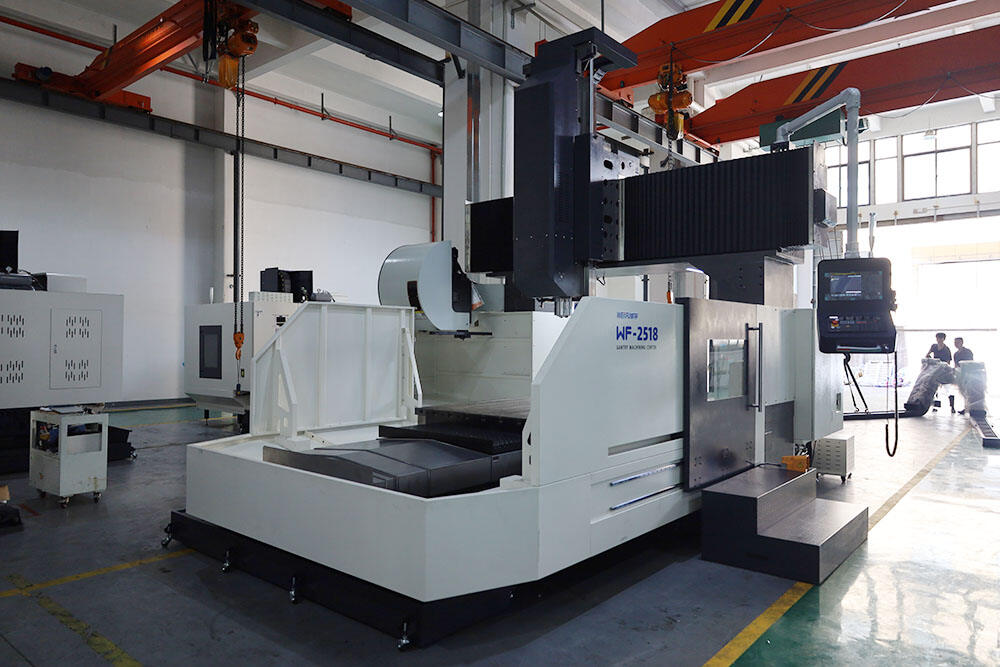
Workpiece Capacity: Aligning Table Size, Load Rating, and Structural Rigidity
Selecting the proper table dimensions and load capacity forms the foundation for any productive gantry machining center. The worktable must not only accommodate the largest workpiece but also maintain rigidity under dynamic cutting forces. A mismatch between table size and part geometry leads to clamping difficulties and reduced effective travel, while exceeding the load rating induces deflection that directly erodes machining precision.
Assessing Maximum Workpiece Dimensions and Dynamic Load Limits
Begin by measuring the longest, widest, and tallest workpiece you expect to machine. The table dimensions should exceed those values by at least 10% on each side to allow for secure clamping and tool clearance. Equally critical is the dynamic load limit—the maximum weight the table can support while moving at programmed feed rates. A 2,000 kg static rating does not guarantee stability during rapid traverse or heavy roughing passes. Consult the machine builder’s load chart to confirm that the combined weight of the workpiece, fixture, and any auxiliary equipment stays within the rated dynamic capacity. Many gantry machining centers include a built-in safety margin of 15–20%, but relying on it routinely accelerates wear on ball screws and linear guides.
Why Overloading Compromises Long-Term Accuracy and VDI 3441 Compliance
Consistent overloading degrades the machine’s geometric alignment over time. The structural loop—comprising the table, base, column, and spindle—experiences micro-deflections that cause the tool tip to wander. This shift invalidates positional accuracy measured per VDI 3441, the internationally recognized standard for large-format CNC machines. For example, a gantry machining center rated for 3,000 kg may deliver bidirectional positioning accuracy of 0.008 mm per 1,000 mm—but exceeding the load by just 20% can increase that error by 50% or more. The resulting dimensional drift forces additional finishing passes, reduces tool life, and eventually requires costly re-alignment. To preserve VDI 3441 compliance over the machine’s lifespan, operators should operate at 70–80% of the rated dynamic capacity—not treat the rating as a routine ceiling.
Precision Performance: Rigidity, Thermal Stability, and Surface Finish Consistency
How Gantry Machining Center Design Affects Micron-Level Repeatability
Structural rigidity directly determines a gantry machining center’s ability to hold micron-level repeatability under cutting forces. Machines with optimized ribbing, high-grade castings, and preloaded linear guides resist deflection during heavy machining. Thermal stability is equally critical: asymmetric heat generation from spindles or drives causes dimensional drift exceeding 10 µm/meter in uncontrolled environments. Advanced designs incorporate symmetrical cooling channels and thermally stable materials to minimize this drift. Consistent surface finish quality depends on this mechanical integrity—vibration or thermal growth during long cycle times creates visible tool marks and compromises Ra values below 0.8 µm. Manufacturers prioritizing these engineering fundamentals achieve positional accuracy within ±0.005 mm across the full work envelope.
Balancing High-Speed Spindle Capabilities with Thermal Management in Large-Envelope Systems
High-power spindles (30 kW+) enable efficient metal removal in large gantry machining centers but generate significant heat loads. Unmanaged, this heat causes localized thermal expansion in the Z-axis assembly, introducing positional errors during extended operations. Effective thermal management balances spindle performance with stability through integrated coolant-to-spindle interfaces and environmental temperature control (±1°C). For aluminum aerospace parts requiring 18,000 RPM, forced air cooling may suffice. However, titanium machining demands liquid-cooled spindles to maintain bearing tolerances while preventing heat transfer to the machine structure. Strategic placement of thermal sensors along the gantry beam allows real-time compensation, ensuring surface finish consistency remains below 1.6 µm Ra throughout production cycles.
Spindle System Selection: Power, Torque, and Material-Specific Optimization
Matching Spindle Torque Curves to Titanium, Aluminum, and Inconel Machining Requirements
Selecting the optimal spindle requires precise alignment with material properties. Titanium alloys demand high torque at lower RPMs (typically 800–1,200 Nm below 6,000 RPM) to overcome cutting resistance while minimizing heat-induced tool wear. Aluminum machining thrives with spindles exceeding 18,000 RPM and moderate torque, enabling efficient chip evacuation and surface finishes under Ra 0.8 µm. For Inconel, prioritize constant-torque motors sustaining 60%+ power across the operating range—critical for uninterrupted roughing passes. Industry data shows mismatched torque curves increase cycle times by 22% and tooling costs by 37% [Machining Efficiency Report 2023]. Key considerations include:
- Titanium: Requires >75% peak torque availability below 4,500 RPM
- Aluminum: Optimal above 15,000 RPM with balanced mid-range torque
- Inconel: Demands flat torque curves maintaining ≥480 Nm up to 80% max speed
Axis Configuration and Multifunctionality: Evaluating 3-Axis vs. 5-Axis Gantry Machining Center ROI
Five-Face Machining Efficiency for Heavy Castings: When Complexity Justifies Investment
Five-face machining revolutionizes production of heavy castings by enabling simultaneous processing from five orientations in one setup. This eliminates multiple repositioning steps required with 3-axis systems, which introduce handling risks and alignment errors for massive components. A 5-axis gantry machining center achieves up to 40% faster cycle times compared to traditional methods by maintaining continuous tool contact. While the initial investment is higher, ROI becomes favorable when machining complex geometries like turbine housings or structural frames. Reduced fixture costs, minimized scrap rates from handling damage, and lower labor requirements offset capital expenses. Manufacturers see payback within 18–36 months when producing high-precision, large-scale components.
Workshop Integration: Space, Foundation, and Control System Compatibility
Before installing a gantry machining center, evaluate the available workshop footprint and floor load capacity. These large-format machines require a minimum clearance of 1.5 to 2 meters around the work envelope for safe operation and maintenance access. The foundation must be a reinforced concrete slab—typically 300–500 mm thick—to absorb dynamic forces and prevent vibration transfer that could degrade machining accuracy. Control system compatibility is equally critical: the machine controller should interface seamlessly with existing ERP and MES platforms. Verify that the CNC supports standard communication protocols like MTConnect or OPC-UA to enable real-time data exchange and remote monitoring. A mismatch in control architecture can lead to costly retrofits or production delays. Proper planning of space, foundation, and integration ensures the gantry machining center delivers consistent throughput without disrupting ongoing operations.
FAQ Section
What factors should be considered when selecting a gantry machining center table size?
Consider the dimensions of the largest workpiece you intend to machine. Add a 10% clearance on all sides for clamping and tool movement. Ensure the dynamic load capacity matches the total weight of the workpiece, fixture, and accessories.
Why is structural rigidity important for precision machining?
Structural rigidity helps the machine maintain positional and dimensional accuracy under heavy cutting forces, ensures repeatable operations, and minimizes defects like tool marks and deviation in surface finish.
How does thermal stability affect machining quality?
Thermal growth in the machine structure can cause errors in tool positioning and dimensional accuracy. Designs with heat management systems mitigate these issues, improving consistency in high-precision operations.
What are the differences between spindle requirements for titanium, aluminum, and Inconel?
Titanium requires high torque at low RPMs. Aluminum favors high-speed spindles with moderate torque. Inconel demands a spindle with a constant torque capability at medium to high operating speeds.
Why choose a 5-axis gantry machining center over a 3-axis system?
5-axis systems reduce setup time and handling errors, enable processing from multiple orientations in one setup, and are ideal for complex components. While costlier upfront, they deliver faster ROI in industries producing large-scale, high-precision parts.
Table of Contents
- Workpiece Capacity: Aligning Table Size, Load Rating, and Structural Rigidity
- Precision Performance: Rigidity, Thermal Stability, and Surface Finish Consistency
- Spindle System Selection: Power, Torque, and Material-Specific Optimization
- Axis Configuration and Multifunctionality: Evaluating 3-Axis vs. 5-Axis Gantry Machining Center ROI
- Workshop Integration: Space, Foundation, and Control System Compatibility

