
 EN
EN
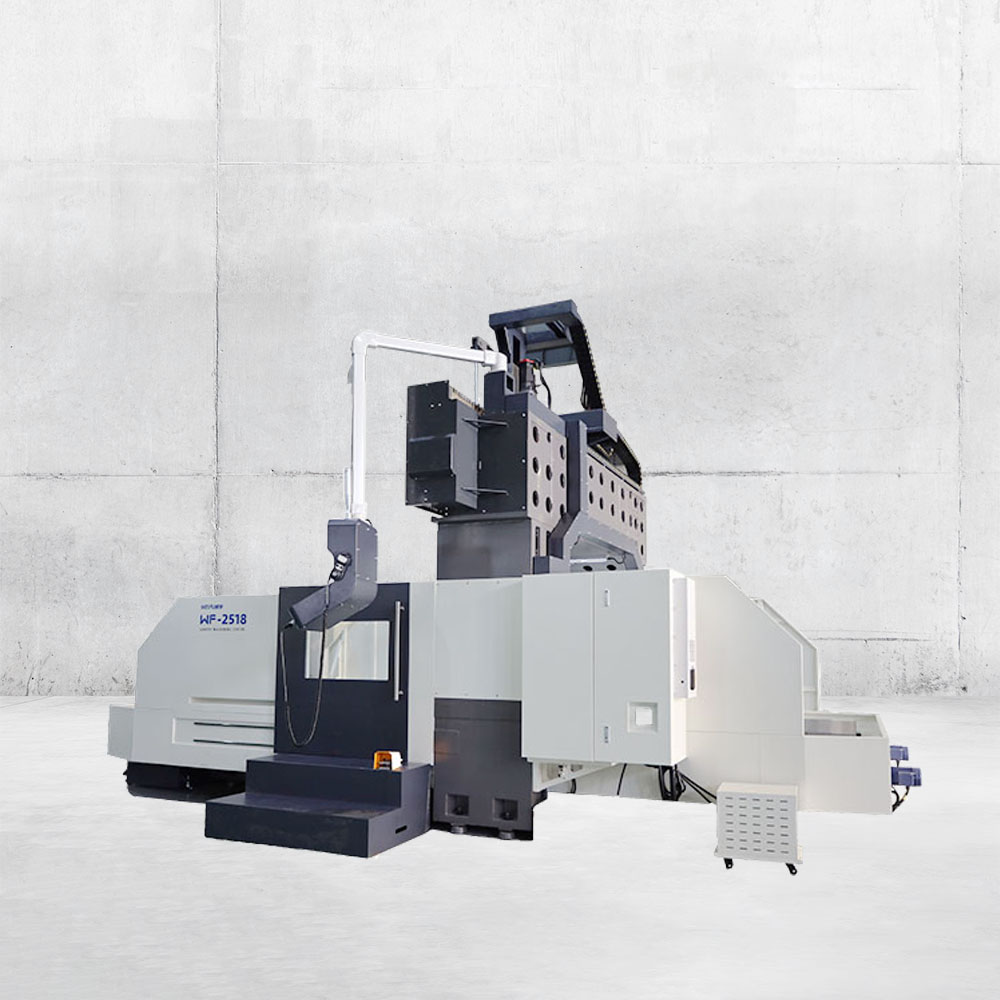
Why Gantry Machining Centers Are Critical for Modern Shipbuilding
Modern shipbuilding demands the simultaneous achievement of structural integrity and dimensional accuracy across massive components. A gantry machining center excels in this environment because its bridge-like frame distributes cutting forces evenly—eliminating the flex and vibration common to smaller machine designs. Shipyards rely on this architecture to mill hull sections, rudder assemblies, and propulsion components that routinely exceed ten meters in length. By keeping the workpiece stationary and moving the gantry overhead, operators maintain consistent tolerances even when cutting high-strength marine steel. This single-clamping approach reduces repositioning, curbing cumulative errors that can compromise watertight fit-ups. The machine’s high load capacity also enables it to handle thick plate weldments without sacrificing surface finish. In an industry where reworking a misaligned bulkhead can delay a dry dock schedule by weeks, the reliability of gantry machining centers translates directly into on-time delivery—and their integration into production lines supports lean manufacturing principles, minimizing manual intervention while ensuring repeatable quality for both naval and commercial vessels.
Structural Rigidity and Dynamic Stability of Gantry Machining Centers
Double-Column Design and Finite Element Validation for Hull Section Machining
The double-column frame provides the foundational rigidity needed for machining large hull sections. Unlike C-frame machines, its symmetrical structure distributes cutting forces evenly across both columns, minimizing deflection during heavy roughing passes. During design, finite element analysis (FEA) validates that the beam and uprights maintain stiffness under loads exceeding 20 tons. For example, simulating a 10,000 N cutting force on a 6-meter-wide section shows displacement below 15 µm—well within tolerance for subsequent welding preparation. This validation ensures the structural loop remains stable even when removing large volumes of material from steel plates, delivering consistent geometric accuracy and reducing the need for manual fit-up adjustments during final assembly.
ISO 230-2 Performance Data: Vibration Damping and Thermal Stability Under Marine Production Loads
Quantitative performance under real-world marine loads is confirmed by ISO 230-2 testing. A typical gantry machining center achieves vibration amplitude of less than 0.8 µm during 10 Hz spindle operation—critical when machining propeller hubs or rudder stocks. Thermal stability is equally vital: over a 6-hour continuous cutting cycle, spindle axis drift remains within 12 µm, thanks to the machine’s massive cast-iron base acting as an effective heat sink. This data directly supports shipyard scheduling, allowing multiple hull panels to be machined in sequence without repeated warm-up cycles. Together, the double-column geometry and validated dynamic behavior deliver the predictable, repeatable precision modern shipbuilding requires.
Precision Machining Capabilities of Gantry Machining Centers for Critical Ship Components
Gantry machining centers deliver the micron-level precision required for the most demanding ship components—from propeller blades to hull frames. Their rigid structure and advanced servo control enable consistent accuracy across massive workpieces, reducing rework and ensuring fit-up in final assembly.
Sub-10 µm Positional Accuracy in Propeller Blade Profiling and Frame Alignment
Propeller blade profiling demands contouring tolerances below 10 µm to maintain hydrodynamic efficiency. Gantry machining centers achieve this through dual feedback encoders and thermal compensation routines that correct for spindle growth during long cuts. Similarly, frame alignment for ship sections—where mismatch can cause structural stress—benefits from the machine’s ability to hold position over multi-meter traverse distances. Typical results show blade surface finishes under Ra 0.8 µm and frame hole positions within ±8 µm, eliminating the manual scraping once required. This level of precision reduces downstream fitting time by up to 30% in trial assemblies.
Tolerance Control in Large-Plate Weldments: Reducing Post-Machining Rectification by 42%
Large welded panels often distort during fabrication, leading to oversized machining allowances. Gantry machining centers with adaptive control can measure actual material thickness and adjust toolpaths in real time, holding flatness to 0.05 mm per meter. In recent production trials, this approach cut post-machining rectification—costly grinding and shimming—by 42%. The key is the machine’s ability to combine high metal removal rates for weld cleanup with finishing passes that respect final tolerances. Over a typical hull panel set, this translates into thousands of hours saved and improved first-pass yield.
Scalable Large-Part Machining: From Hull Panels to Offshore Modules
30+ Meter Traverse Envelopes and Modular Rail Integration for Integrated Panel Machining
For integrated panel machining, gantry machining centers provide traverse envelopes exceeding 30 meters. Modular rail integration allows shipbuilders to extend the work area as needed—accommodating large hull sections without repositioning. This reduces setup time and improves throughput. Multiple spindles and automatic tool changers enable drilling, tapping, and milling in a single pass, delivering complete hull panel processing. Shipyards can scale the system incrementally by adding rail segments, minimizing upfront investment while future-proofing production capacity.
Application Expansion: LNG Carrier Modules, Offshore Support Vessel Machinery, and Hybrid Fabrication Cells
Beyond hull panels, these systems process LNG carrier modules, offshore support vessel machinery, and components for hybrid fabrication cells. The gantry machining center adapts to varied geometries—from thick plate weldments to precision-machined interfaces—without reconfiguration. In hybrid cells, it performs baseline subtractive operations that complement additive deposition. This flexibility makes it a cornerstone of modern, multipurpose marine fabrication lines—reducing the need for multiple specialized machines.
FAQ
What is a gantry machining center?
A gantry machining center is a high-precision machine tool used primarily for machining large components. It features an overhead gantry structure, allowing the workpiece to remain stationary while the cutting tool moves.
Why are gantry machining centers essential in shipbuilding?
They offer structural integrity, high dimensional accuracy, and the capacity to handle large, heavy components such as hull sections and propulsion systems, which are critical in modern shipbuilding.
How do gantry machining centers ensure precision under heavy loads?
Their double-column design and finite element validation minimize deflection and ensure rigidity, while ISO 230-2 testing confirms dynamic stability during high-load operations.
Can these systems handle both roughing and finishing tasks?
Yes, gantry machining centers combine high metal removal rates for roughing with precise finishing passes, significantly reducing post-machining work.
Are gantry machining centers scalable for manufacturing needs?
Absolutely, they integrate modular rails that allow for extended work envelopes and scalability, meeting the demands of large-part machining.

