
 EN
EN
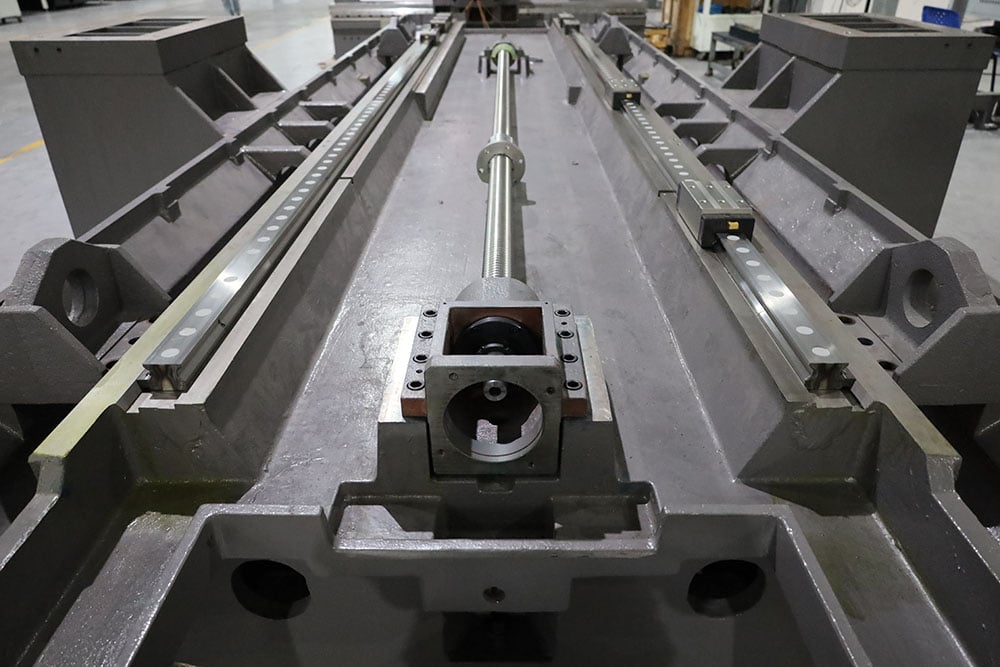
A gantry machining center represents one of the most versatile and powerful solutions available for manufacturers seeking consistent precision and reliability in high-volume production environments. These machines have become indispensable across industries where throughput, accuracy, and operational durability directly impact profitability and competitive advantage. Understanding how a gantry machining center delivers these benefits is essential for facility managers, production engineers, and manufacturing decision-makers who need to invest wisely in their capital equipment.
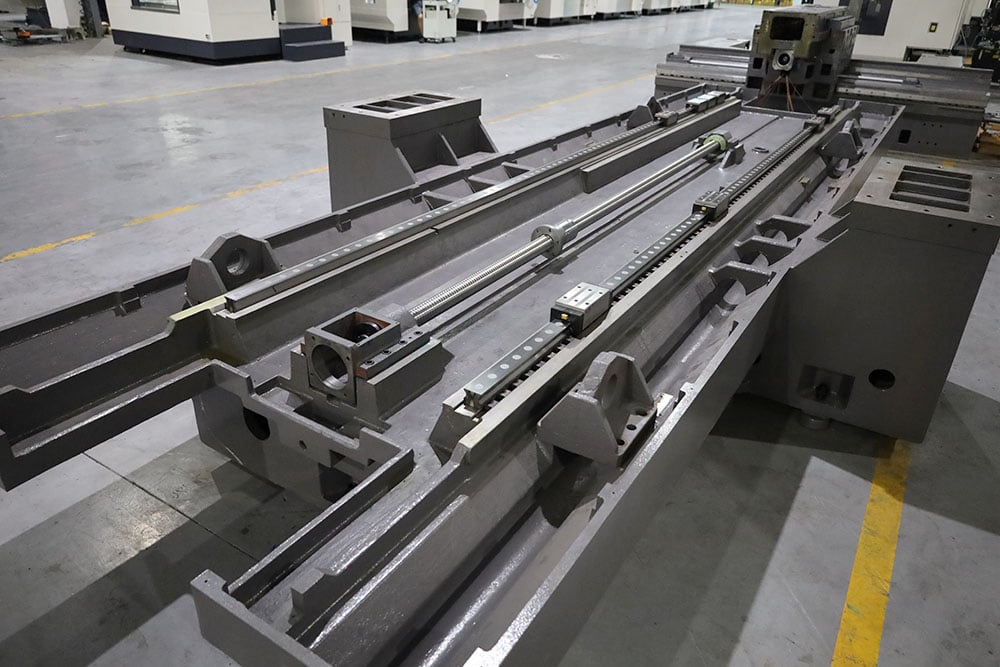
The gantry machining center design has evolved into a proven platform that handles demanding workpieces with repeatable speed and dimensional accuracy. Unlike traditional vertical machining centers, a gantry machining center features an overhead portal structure that enables superior load distribution, enhanced spindle stability, and access to larger workpiece envelopes. This architectural advantage makes the gantry machining center particularly suited to high-volume production runs where consistency and uptime are non-negotiable.
How the Gantry Machining Center Achieves Superior Durability
Structural Design and Material Selection
The foundation of any reliable gantry machining center lies in its structural integrity. A quality gantry machining center incorporates heavy-duty cast iron or fabricated steel frames that resist deflection under continuous cutting loads. The overhead gantry configuration distributes cutting forces across a wider base, reducing stress concentration on any single component. This load-sharing principle is why a gantry machining center can maintain tighter tolerances over extended production cycles compared to smaller vertical machines. The material composition also provides superior damping characteristics, which minimizes vibration-induced errors that could compromise part quality.
Spindle and Thermal Stability
Thermal growth represents one of the most persistent threats to dimensional stability in precision manufacturing. A modern gantry machining center addresses this challenge through advanced spindle cooling systems, thermal compensation algorithms, and environmentally controlled cabinet designs. The larger thermal mass of a gantry machining center naturally buffers temperature fluctuations, while integrated cooling circuits actively manage spindle and bearing temperatures throughout production shifts. By maintaining thermal consistency, a gantry machining center delivers predictable part dimensions hour after hour, reducing scrap rates and rework costs in high-volume environments.
Reliability Performance in High-Volume Production
Maintenance Intervals and Component Longevity
Investment in a gantry machining center extends beyond the purchase price when you consider the operational lifespan and maintenance requirements. Industrial-grade gantry machining center components are engineered for extended service intervals, with ball screws, linear guides, and spindle bearings selected for high-cycle durability. Preventive maintenance protocols for a gantry machining center are straightforward and cost-effective, often involving filter changes, lubrication schedules, and periodic thermal calibration rather than frequent rebuild cycles. Manufacturers operating a gantry machining center in continuous-duty environments report consistent uptime rates exceeding 95 percent, which directly translates to production capacity and revenue predictability.
Operational Redundancy and Control Systems
Modern gantry machining center systems incorporate redundant sensor arrays and fault-detection logic that prevent catastrophic failures and unplanned downtime. A contemporary gantry machining center equipped with multi-axis servo monitoring, spindle load feedback, and collision avoidance continuously validates machine performance against baseline parameters. When a gantry machining center detects anomalies in vibration signature, axis acceleration, or thermal drift, the CNC system alerts operators before failures occur. This proactive diagnostic capability transforms a gantry machining center from a reactive tool into an active partner in quality assurance and risk mitigation.
Optimization Strategies for Maximum Production Throughput
Tool Path Efficiency and Cycle Time Reduction
The architectural advantages of a gantry machining center enable tool path strategies that would be inefficient or impossible on smaller machines. A gantry machining center accommodates larger tool magazines, multiple tool carrousels, and quick-change systems that minimize non-cutting time between operations. Advanced CAM software specifically optimized for gantry machining center capabilities can compress cycle times by 15 to 30 percent through intelligent tool path nesting, concurrent multi-spindle operations, and optimized cutting parameters. When a gantry machining center operates at peak efficiency, the cost per unit decreases substantially, improving margins on high-volume contracts.
Integration with Manufacturing Execution Systems
A gantry machining center performs most effectively when integrated into a broader manufacturing execution system that provides real-time scheduling, inventory management, and quality tracking. Modern gantry machining center controllers communicate via Ethernet, OPC-UA, or proprietary industrial protocols to transmit production status, part counts, and performance metrics to enterprise systems. This connectivity allows a gantry machining center to participate in lights-out manufacturing scenarios, where the machine continues operating during unmanned shifts and delivers completed parts to downstream inspection and assembly stations. By embedding a gantry machining center into a digital manufacturing ecosystem, producers extract maximum value from their capital investment.
FAQ
What types of materials can a gantry machining center process effectively?
A gantry machining center is well-suited for aluminum, steel, stainless steel, cast iron, composite materials, and various alloys. The rigid structure and powerful spindle of a gantry machining center handle both light finishing cuts in aluminum and aggressive roughing passes in hardened steel. Different cutting tool geometries and feed rates optimize performance across material families, and a gantry machining center controller allows operators to program material-specific strategies for consistent results.
How does a gantry machining center compare to a traditional vertical milling machine for production runs?
A gantry machining center excels in high-volume production runs due to superior load capacity, larger work envelope, better thermal stability, and faster cycle times. While a vertical machine may work for lower volumes or smaller parts, a gantry machining center distributes cutting forces more efficiently and maintains tighter tolerances over extended runs. The investment in a gantry machining center is justified when production volume and accuracy requirements demand the superior capabilities and reliability that horizontal load distribution provides.
What is the typical return on investment timeline for a gantry machining center in high-volume manufacturing?
Most manufacturers see measurable ROI from a gantry machining center within 18 to 36 months through reduced cycle times, lower scrap rates, improved uptime, and reduced labor per part. The exact payback period depends on production volume, part complexity, existing equipment capabilities, and labor costs in your region. A gantry machining center that operates continuously and is properly maintained typically generates positive cash flow well before depreciation cycles conclude.

