
 EN
EN
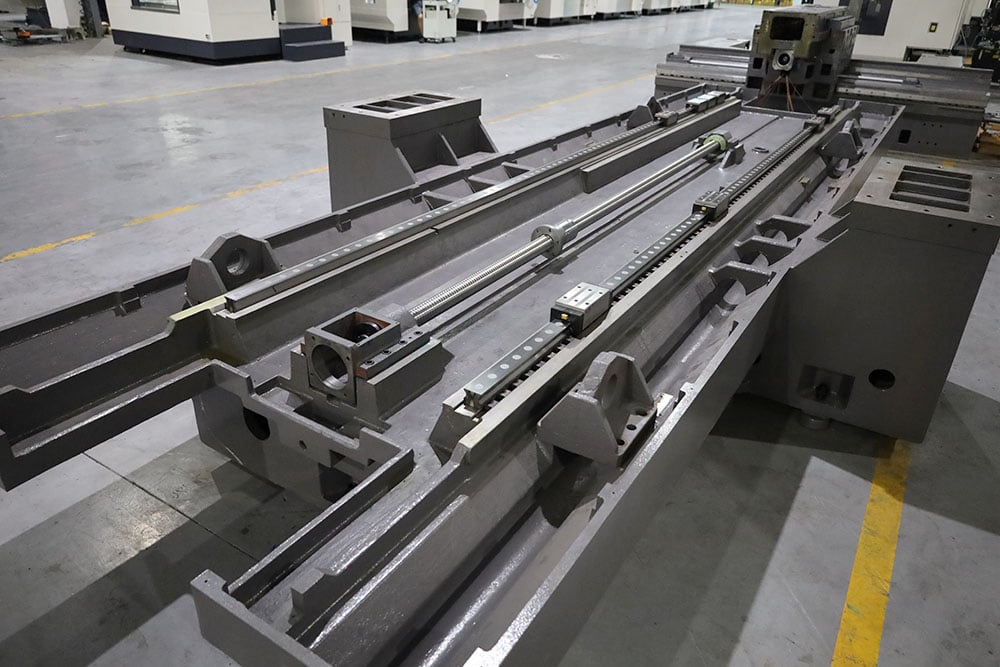
Modern manufacturing demands precision, speed, and versatility when producing complex parts across diverse industries. A gantry machining center has emerged as a cornerstone technology for businesses seeking to achieve these demanding requirements simultaneously. Unlike traditional vertical machining centers, a gantry machining center offers superior rigidity, larger working envelopes, and exceptional stability when handling heavy, complex workpieces that require multi-axis operations.
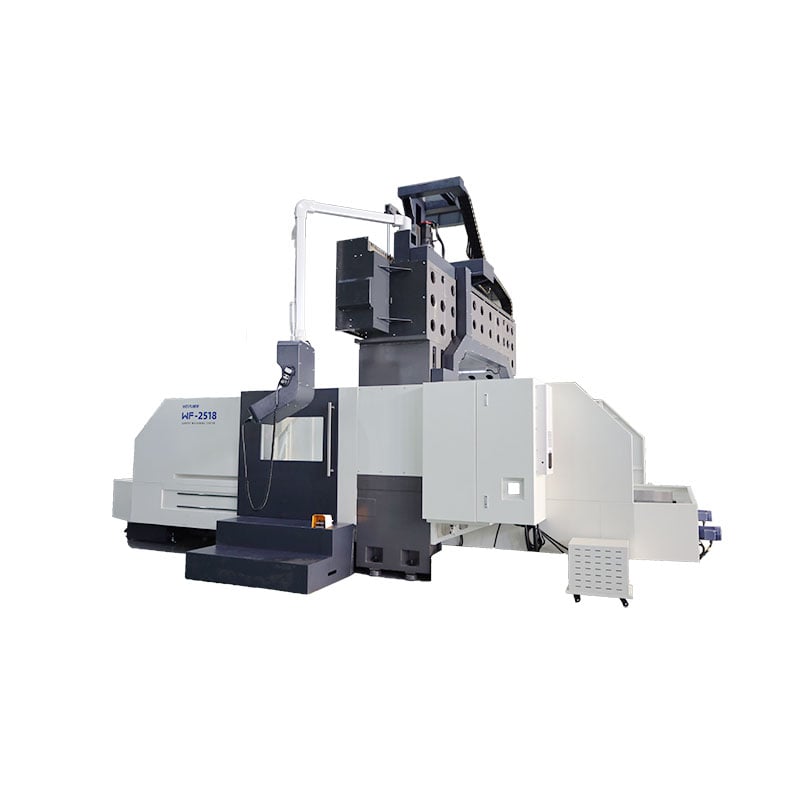
The architecture of a gantry machining center is fundamentally designed to support multi-axis machining operations with precision and repeatability. By integrating spindle heads capable of five, six, or more simultaneous axes, a gantry machining center reduces the need for multiple setups, minimizes handling errors, and accelerates production cycles. This technological approach has transformed how manufacturers approach job shops, aerospace components, automotive parts, and industrial equipment fabrication.
Understanding Gantry Machining Center Structural Advantages
Rigidity and Stability in Heavy-Duty Operations
A gantry machining center is engineered with a horizontal beam supported by two vertical columns, creating an inherently rigid structure that resists deflection during cutting. This configuration allows a gantry machining center to maintain dimensional accuracy even when applying high cutting forces necessary for hard materials like cast iron, steel, and composites. The distributed support system of a gantry machining center prevents the chatter and vibration issues that plague lighter machine tools, resulting in superior surface finishes and tool life.
The structural design of a gantry machining center also accommodates larger workpieces without sacrificing precision. Manufacturing facilities processing components exceeding three meters in length or weighing several tons benefit from the extended work envelope that a gantry machining center provides. This capability directly translates to reduced material waste, fewer secondary operations, and faster delivery timelines for customers.
Multi-Axis Integration and Flexibility
A gantry machining center typically features three linear axes (X, Y, Z) plus rotary capabilities that enable simultaneous five or six-axis machining. This multi-axis configuration within a single gantry machining center setup eliminates the traditional requirement to reposition workpieces between different machines. Manufacturers can mill complex surfaces, drill angled holes, cut internal passages, and apply specialized finishing operations without manual intervention.
The flexibility inherent in a gantry machining center extends beyond geometric complexity. Advanced CNC controls allow a gantry machining center to switch between different program sequences, adapt tool paths dynamically, and integrate real-time monitoring systems. Facilities leveraging this flexibility report significant reductions in lead times and improvements in overall equipment effectiveness.
Multi-Axis Machining Capabilities and Industrial Applications
Complex Geometric Feature Fabrication
Contemporary industrial demand frequently requires components featuring undercuts, sculptured surfaces, internal cavities, and intersecting geometric features that would necessitate multiple setups on conventional machines. A gantry machining center addresses this challenge by enabling simultaneous access to multiple surfaces and angles. Aerospace turbine blades, hydraulic manifolds, and medical device housings represent categories of parts where a gantry machining center delivers superior capability compared to traditional sequential machining approaches.
The programming sophistication available within a gantry machining center allows CAM software to generate optimized tool paths that minimize air cuts and maximize material removal rates. When a gantry machining center operator receives a part design, the engineering team can often identify opportunities to consolidate operations, thereby reducing cycle time by twenty to forty percent relative to conventional methods. This efficiency gain directly impacts production capacity and profitability.
Precision and Tolerances in Multi-Axis Operations
Maintaining tight tolerances across multiple axes simultaneously remains one of the most demanding aspects of precision manufacturing. A gantry machining center achieves tolerance capabilities typically ranging from ±0.005 to ±0.002 inches across linear axes, with rotary axes contributing additional accuracy through servo motor control and feedback systems. This precision level within a single gantry machining center setup proves essential for automotive transmission housings, industrial pump components, and specialized equipment requiring perfect geometric relationships.
The consistency delivered by a gantry machining center extends across entire production runs rather than degrading as tools wear. Advanced probing systems integrated into a gantry machining center enable automatic tool offset adjustments, maintaining dimensional stability even as cutting edges gradually dull. This capability reduces scrap rates and ensures that later parts in a batch match the initial parts precisely.
Operational Efficiency and Return on Investment Considerations
Production Cycle Time Reduction
The most immediate operational advantage of deploying a gantry machining center involves dramatic reductions in setup time and part handling. Traditional approaches might require a workpiece to visit five separate machines, with fifteen to twenty setup steps required. A single gantry machining center can consolidate these operations into one or two setups, reducing total cycle time by sixty to eighty percent for complex components. This efficiency translates directly to higher throughput and improved equipment utilization.
Manufacturers upgrading to a gantry machining center frequently discover unexpected secondary benefits. Reduced material handling decreases damage risk, improves traceability for regulated industries, and enables more responsive production scheduling. Facilities report that a single gantry machining center often replaces three to four conventional machines while occupying comparable floor space due to its vertical architecture.
Quality Improvement and Scrap Reduction
The precision capabilities and single-setup orientation of a gantry machining center dramatically reduce dimensional errors and scrap rates. Many manufacturers report scrap reductions exceeding fifty percent within six months of deploying a gantry machining center, particularly when machining parts previously produced through multiple operations. Each setup elimination removes an opportunity for measurement errors and cumulative tolerance stack-up that plagued the old workflow.
Quality improvements from a gantry machining center extend to surface finish, hole location accuracy, and geometric form control. Consistency across these dimensions proves particularly valuable for components destined for medical, aerospace, or defense applications where quality certifications and traceability requirements demand documented precision. Investment in a gantry machining center thus provides competitive advantage through verifiable quality improvement.
FAQ
What industries benefit most from gantry machining center technology?
Industries processing large, complex parts derive the greatest benefit from gantry machining center capabilities. Aerospace manufacturing, automotive casting machining, industrial equipment fabrication, marine component production, and renewable energy equipment manufacturing represent primary segments where a gantry machining center delivers exceptional value. Any manufacturing environment producing parts exceeding two meters in length or requiring five or more simultaneous axes should evaluate gantry machining center solutions.
How does a gantry machining center compare to horizontal boring mills for complex parts?
While horizontal boring mills provide excellent rigidity for certain applications, a gantry machining center offers superior flexibility through integrated rotary axes and higher cutting speeds. A gantry machining center accommodates larger workpieces and typically costs less to operate over extended production runs. However, some specialty applications may favor horizontal boring mills due to specific spindle configurations or tooling requirements, making application analysis essential before equipment selection.
What programming expertise is required to operate a gantry machining center effectively?
Modern gantry machining center systems integrate user-friendly CAM software interfaces that significantly reduce programming complexity compared to legacy CNC equipment. Experienced CNC programmers typically master new gantry machining center systems within two to four weeks through manufacturer training. Many facilities discover that operators already familiar with five-axis or multi-axis programming transition seamlessly to gantry machining center operations, while traditional two or three-axis operators may require additional development time.

