
 EN
EN
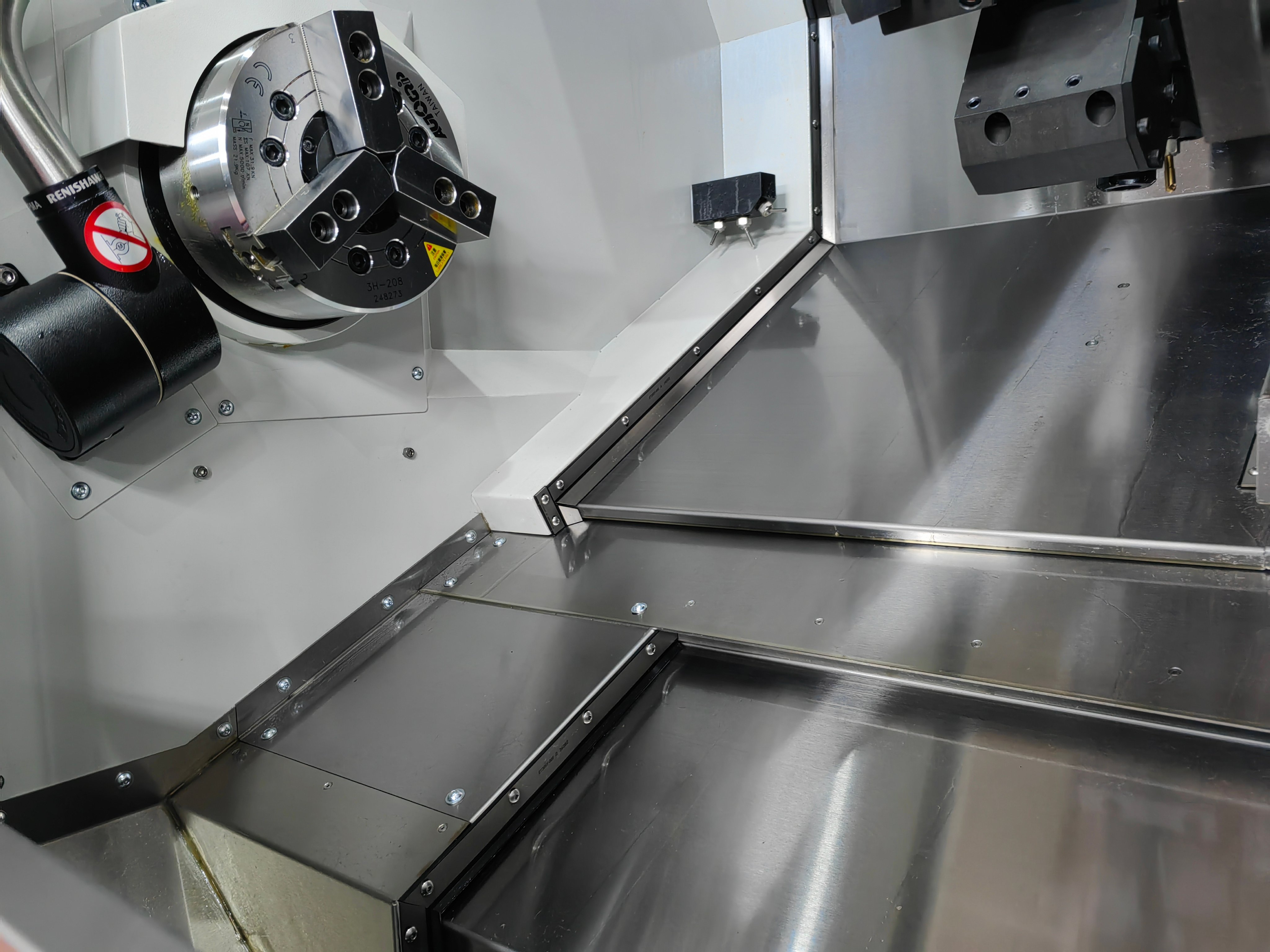
Modern manufacturing demands precision, speed, and versatility that traditional turning machines simply cannot deliver. A cnc lathe has revolutionized production environments by automating complex rotational cutting operations with exceptional accuracy. Multi-axis cnc lathe systems take this capability further, enabling manufacturers to complete intricate turning tasks in single setups, reducing cycle times and minimizing errors that compromise quality and profitability.
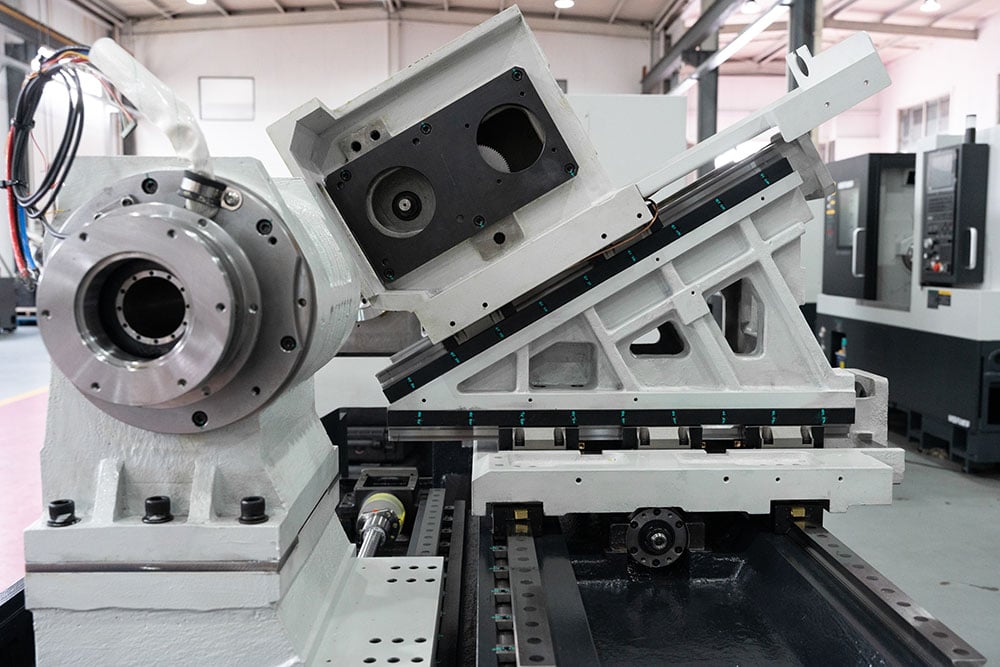
The evolution from manual and semi-automatic lathes to advanced cnc lathe technology represents a fundamental shift in how industries approach turning operations. Multi-axis configurations add Y-axis and live tooling capabilities, allowing simultaneous radial and axial machining without repositioning workpieces. This integration unlocks design possibilities previously reserved for multi-machine workflows, making sophisticated component production economically viable for mid-sized manufacturers and contract shops.
Understanding Multi-Axis CNC Lathe Capabilities
Core Functionality and Axis Configuration
A traditional cnc lathe operates with X and Z axes, controlling radial depth and axial feed respectively. Multi-axis cnc lathe systems introduce additional axes such as a Y-axis for off-center boring and milling operations, combined with live tooling that rotates independently from the spindle. This architecture enables a single cnc lathe to perform turning, boring, drilling, milling, threading, and grooving in one continuous cycle without manual part repositioning.
The sophistication of modern cnc lathe configurations allows programmers to design part geometry that would otherwise require transfer between three or four separate machines. By consolidating operations into a single cnc lathe setup, manufacturers reduce handling damage, fixture costs, and setup time. The precision inherent in cnc lathe automation ensures that complex features maintain tight tolerances across production runs, eliminating the variability associated with multiple machine transfers.
Precision Advantages and Accuracy Metrics
Multi-axis cnc lathe systems achieve positional accuracies within 0.0001 inches through servo-driven axis motors and closed-loop feedback systems. This precision level proves critical for aerospace components, automotive fuel injectors, and medical device parts where dimensional consistency directly impacts safety and function. A cnc lathe with advanced calibration and thermal compensation maintains accuracy across temperature fluctuations typical in production environments.
Surface finish quality from multi-axis cnc lathe operations typically ranges from 8 to 32 microinches, depending on tool geometry, feed rates, and material properties. This level of surface finish often eliminates or minimizes secondary polishing operations, reducing overall part cost. The repeatability of a cnc lathe ensures that the first part and the ten-thousandth part maintain identical surface characteristics and dimensional profile, a consistency impossible to achieve with manual machining.
Industrial Applications and Use Case Scenarios
Complex Component Manufacturing
Medical device manufacturers rely heavily on multi-axis cnc lathe capabilities to produce surgical instruments, implant components, and diagnostic equipment with minimal secondary operations. A cnc lathe equipped with Y-axis live tooling can machine complex features like radial drilled holes, slots, and contoured surfaces that would otherwise require transfer to a milling machine. The consolidation of operations on a single cnc lathe reduces the risk of dimensional drift caused by multiple machine tool thermal expansion patterns.
Automotive suppliers use advanced cnc lathe technology to manufacture fuel injector bodies, transmission shafts, and hydraulic valve components that demand micron-level dimensional accuracy. Multi-axis cnc lathe configurations allow simultaneous finishing of internal and external features, reducing cycle times by 40 to 60 percent compared to traditional sequential machining approaches. The flexibility of a cnc lathe platform enables rapid changeover between different part variants without extensive fixture rework.
Prototyping and Short-Run Production
Contract manufacturers and tool and die shops leverage multi-axis cnc lathe systems for prototype development and low-volume specialized parts. The programming flexibility of a cnc lathe allows engineers to iterate designs quickly, incorporating customer feedback without expensive tooling investment. A cnc lathe operator can modify programs between runs, accommodating dimensional adjustments or feature refinements that meet evolving specifications.
The economic advantages of multi-axis cnc lathe configurations become evident in short-run environments where setup costs and machine utilization efficiency drive profitability. Unlike dedicated transfer machines requiring substantial capital investment and setup time, a cnc lathe offers startup-friendly operational economics. Material waste reduction through optimized tool paths on a cnc lathe directly improves profit margins on lower-volume contracts.
Integration, Programming, and Operational Efficiency
CAM Software and Automation Workflow
Modern cnc lathe systems integrate with CAM software platforms that automatically generate toolpaths from 3D design models, reducing programmer lead time and human error potential. Multi-axis cnc lathe programming requires sophisticated collision avoidance algorithms and simulation tools to prevent costly crashes during complex tool movements. Advanced CAM systems specifically designed for cnc lathe applications can optimize feed rates, spindle speeds, and tool sequencing to minimize cycle time while maintaining surface finish quality.
The integration of predictive maintenance software with modern cnc lathe platforms enables condition-based servicing that extends spindle life and reduces unplanned downtime. Real-time monitoring systems on multi-axis cnc lathe equipment track spindle vibration, thermal conditions, and tool wear, alerting operators before quality degradation occurs. This proactive approach transforms cnc lathe maintenance from reactive problem-solving into planned efficiency optimization.
Operator Skills and Training Requirements
Operating a sophisticated multi-axis cnc lathe requires deeper technical knowledge than traditional manual lathe expertise. Proficient cnc lathe operators must understand G-code programming fundamentals, tool selection criteria, and offset management across multiple axes. Training programs for cnc lathe operation emphasize safety protocols specific to high-speed automated equipment, including emergency stop procedures and proper toolholding techniques.
Career advancement in cnc lathe operation often leads to programming and setup specialist roles that command premium compensation. Manufacturers investing in comprehensive cnc lathe operator training programs experience higher equipment utilization rates and better first-pass quality performance. The transition from manual to CNC represents career development opportunity for experienced machinists seeking broader skill application on advanced cnc lathe platforms.
FAQ
What distinguishes multi-axis CNC lathe systems from conventional CNC lathes?
Multi-axis cnc lathe systems incorporate additional axes beyond the standard X and Z, typically including a Y-axis for off-center operations and live tooling for rotary cutting operations independent of the main spindle. This architecture enables single-setup machining of complex features like radial holes, slots, and contours that would otherwise require multiple machine transfers. A conventional cnc lathe cannot perform simultaneous rotational and milling operations without manual repositioning, making multi-axis configurations essential for complex component production.
How does investment in a multi-axis CNC lathe impact production economics?
Multi-axis cnc lathe investment reduces per-part machining costs through consolidated operations, minimized handling damage, and reduced secondary finishing requirements. While initial capital expenditure exceeds single-axis equipment, the faster cycle times and improved accuracy of multi-axis cnc lathe systems justify the investment for manufacturers producing components with complex geometry or tight tolerances. The flexibility of a cnc lathe platform also extends useful equipment life by accommodating design variations without significant retooling.
What material types work best with multi-axis CNC lathe machining?
Multi-axis cnc lathe systems excel with aluminum, stainless steel, titanium, brass, and cast iron materials commonly specified in aerospace, medical, and automotive applications. Softer materials like aluminum allow faster feed rates and spindle speeds on a cnc lathe, while harder alloys require controlled speeds and specialized cooling strategies. The precision capabilities of a cnc lathe are particularly valuable when machining materials with tight dimensional specifications or challenging surface finish requirements.

