
 EN
EN
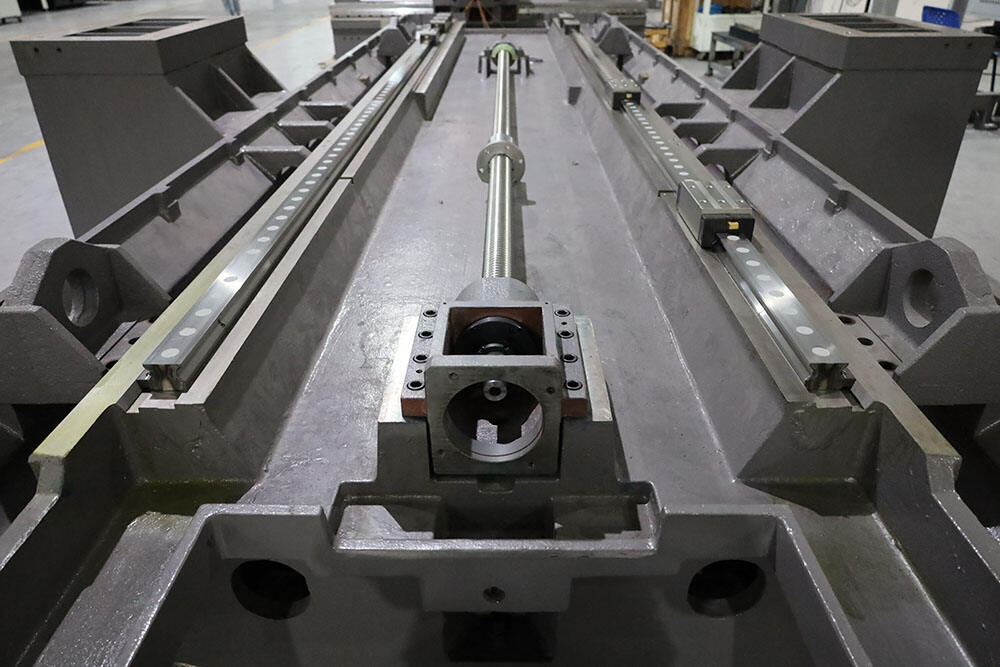
Structural Rigidity: The Foundation of Micrometer Accuracy in Large-Part Machining
How gantry architecture minimizes deflection and thermal drift over long travel axes
The inherent rigidity of a gantry machining center stems from its symmetrical dual-column design, which distributes cutting forces evenly across the structure. Unlike conventional C-frame machines—where spindle forces induce asymmetric loading—the closed-loop gantry configuration resists angular twisting during heavy cuts. This stability is critical when machining large components like aerospace wing spars or wind turbine hubs, where even micrometer-scale tooltip deflection compromises dimensional integrity. The crossbeam also mitigates thermal drift by maintaining consistent alignment across extended X-axis travels, especially important when processing thermally conductive materials such as aluminum alloys.
Real-world validation: 0.008 mm positional repeatability across 3,000 mm Y-axis travel (Boeing Supplier Report, 2023)
A 2023 technical report from a major aerospace tier-1 supplier confirmed that gantry machines achieve 0.008 mm positional repeatability across full 3,000 mm Y-axis travel while machining 30-meter wing components. This performance surpasses traditional moving-table designs by 68% in thermal stability during continuous 72-hour operations. Such consistency enables direct finishing of high-tolerance bearing surfaces without secondary operations—eliminating cumulative error from multiple setups. As a result, 92% of new large-part machining installations now adopt gantry configurations for mission-critical components where dimensional integrity is non-negotiable.
Single-Setup Multi-Process Machining: Eliminating Cumulative Errors and Handling Time
Synchronized milling, drilling, boring, and tapping under unified CNC control
Gantry machining centers integrate milling, drilling, boring, and tapping into a single program cycle—eliminating part transfers between machines. Because all operations occur within one clamping setup, datum integrity remains uncompromised. When a large aerospace component requires both rough milling and precision tapping, the machine executes both without unclamping or repositioning. This preserves positional accuracy across features and prevents tolerance stacking caused by successive setups. Operators gain significant time savings, too: no manual handling, no re-establishment of work offsets, and no risk of misalignment during re-fixturing. For industries demanding tight tolerances—such as aerospace and medical device manufacturing—this capability is essential to achieving micron-level consistency.
CAD/CAM-integrated toolpath optimization for large-part workflow consolidation
Modern CAD/CAM systems generate intelligent, collision-free toolpaths that sequence operations for maximum efficiency within a single setup. The software optimizes the order of milling passes, drilling cycles, and boring operations to minimize non-productive travel and reduce tool wear. For oversized parts, completing all processes without repositioning becomes a decisive throughput advantage. Consolidated workflows cut cycle times while preserving accuracy—and post-process inspection consistently validates that all features meet specified tolerances. This digital coordination between design intent and physical execution is foundational to efficient, high-precision large-part production.
Intelligent Automation: Cutting Non-Productive Time with High-Speed ATC and Predictive Tool Management
Modern gantry machining centers significantly reduce non-cutting time through integrated automation. High-speed Automatic Tool Changers (ATC) slash idle periods during complex operations. A 2024 MTConnect benchmark analysis documented a 37% reduction in auxiliary time compared to traditional bridge mills—driven by rapid tool swaps and optimized positioning logic.
Predictive tool wear analytics integrated with automatic tool change systems
AI-powered modules monitor real-time spindle load, vibration, and thermal signatures to assess tool condition. In documented applications, these systems adjust cutting parameters every 5 milliseconds—extending carbide tool life by 22%, per industry reports. Predictive models forecast remaining usable life and trigger ATC interventions precisely when needed. This integration avoids unplanned tool failures while maximizing utilization, helping manufacturers sustain scrap rates below 1.5% in high-mix, high-precision production environments.
Partner with Weifu CNC – Your Trusted OEM Gantry Machining Center Manufacturer
As a 20-year experienced Chinese CNC machine supplier specializing in OEM/ODM solutions, Wuxi Weifu International Trade Co., Ltd. delivers high-performance gantry machining centers engineered for global heavy-duty manufacturing demands. Our precision equipment complies with international standards (ASME, ISO) and caters to core industries: aerospace, new energy, marine engineering, and heavy machinery.
We offer standard gantry machines, fully customized configurations, and turnkey machining solutions tailored to your unique production requirements. Our professional engineering team provides end-to-end support: from technical consultation and design customization to global logistics, on-site installation guidance, and 12-month reliable after-sales service. We enforce strict quality control, support rapid customization, and guarantee consistent product reliability to help you boost production efficiency, lower operational costs, and gain a competitive edge in the global market.
Ready to upgrade your large-component precision machining capabilities? Contact our international sales team today for a free technical quote, detailed product catalog, or one-on-one customized solution consultation. Let’s build a long-term OEM partnership and drive your manufacturing success together!
FAQ
What is the advantage of gantry architecture in machining?
Gantry architecture offers symmetrical dual-column designs that resist angular twisting, minimize deflection, and reduce thermal drift, ensuring high accuracy in machining large components.
How does single-setup multi-process machining help in precision manufacturing?
Single-setup machining eliminates part transfers and ensures datum integrity, preventing cumulative errors and misalignment during re-fixturing, while saving time and maintaining micron-level consistency.
What are predictive tool wear analytics?
Predictive tool wear analytics use AI-powered modules to monitor tool conditions in real time, adjust cutting parameters, extend tool life, and schedule automatic tool changes, reducing unplanned tool failures.
Why are gantry machines preferred for large-part manufacturing?
Their ability to achieve high positional accuracy, maintain thermal stability over long travel axes, and complete multiple processes in a single setup makes gantry machines ideal for large-part manufacturing.
How does CAD/CAM integration improve machining efficiency?
Modern CAD/CAM systems optimize toolpaths, minimize non-productive travel, reduce tool wear, and ensure all processes are executed efficiently within a single setup.
Table of Contents
- Structural Rigidity: The Foundation of Micrometer Accuracy in Large-Part Machining
- Single-Setup Multi-Process Machining: Eliminating Cumulative Errors and Handling Time
- Intelligent Automation: Cutting Non-Productive Time with High-Speed ATC and Predictive Tool Management
- Partner with Weifu CNC – Your Trusted OEM Gantry Machining Center Manufacturer
-
FAQ
- What is the advantage of gantry architecture in machining?
- How does single-setup multi-process machining help in precision manufacturing?
- What are predictive tool wear analytics?
- Why are gantry machines preferred for large-part manufacturing?
- How does CAD/CAM integration improve machining efficiency?

