
 EN
EN
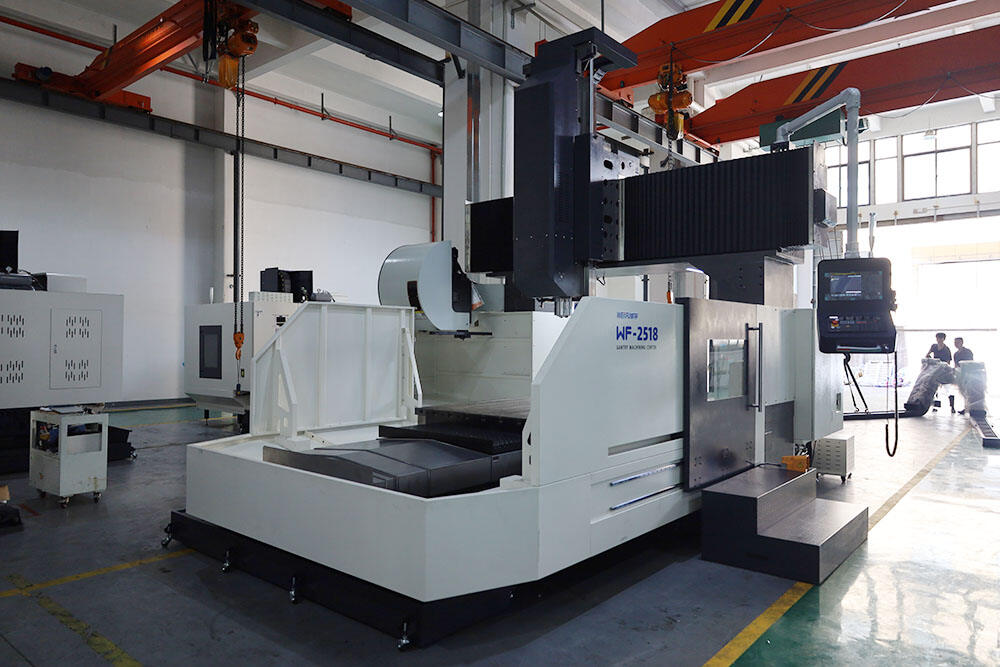
Unmatched Structural Rigidity and Large-Part Machining Capacity
The gantry machining center’s structural superiority is the key enabler for high-performance production of large, heavy components.
Monolithic Bridge Design and Dynamic Load Distribution for Ultra-High Precision
The monolithic bridge design integrates the crossbeam and columns into a single rigid casting—eliminating joints and interfaces that could introduce compliance or hysteresis. When cutting forces act at the tool tip, the bridge uniformly distributes load across both columns and the base. This dynamic load distribution is further optimized via finite element analysis (FEA) of the casting geometry, ensuring structural deflection remains within microns—even during rapid traverse or heavy cuts. Such stability is critical for aerospace structural frames and large mold cavities, where deviations risk scrapping expensive workpieces. Unlike moving-table designs, the gantry configuration keeps the workpiece stationary while the spindle moves in X, Y, and Z axes—fully isolating part acceleration forces from the cutting zone. The result is an inherently stable platform that preserves tool centerpoint accuracy throughout the entire machining cycle.
Thermal Stability and Cutting Force Absorption in Extended Heavy‑Duty Cycles
Extended heavy-duty cycles generate significant heat from cutting, spindle operation, and chip formation. A well-engineered gantry machining center mitigates thermal drift through symmetric structural design: uniform expansion of the bridge and columns minimizes relative displacement between spindle and workpiece. Internal coolant channels circulate temperature-controlled fluid through critical zones, while polymer concrete or high-damping cast iron in the base absorbs vibrational energy and suppresses resonance. Embedded temperature sensors feed real-time data to advanced control systems, which apply thermal compensation algorithms to maintain dimensional stability over multi-hour runs. This combination of passive damping and active compensation allows manufacturers to sustain tight tolerances without frequent re-measurement or operator intervention—ensuring consistent quality across long production sequences.
Multi-Axis Precision and Application-Specific Flexibility
5-Axis Gantry Machining Center Solutions for Aerospace Structural Components
Aerospace manufacturers require extreme precision for large, complex parts such as wing spars, fuselage frames, and engine mounts. A 5-axis gantry machining center meets these demands by enabling full angular access to the workpiece in a single setup—eliminating repositioning errors and reducing cycle time. Its rigid bridge structure supports high-torque cutting while maintaining micron-level positional accuracy. For example, titanium bulkheads with deep pockets and intricate contours can be milled to specification without compromising surface integrity. Freeform aerodynamic surfaces, thin-walled structures prone to distortion, and integrated features like stiffening ribs are all achievable with repeatable fidelity. By consolidating roughing, finishing, drilling, and deburring into one operation, these systems cut lead times significantly—supporting faster certification cycles and lower scrap rates. When paired with robust thermal management and optimized toolpaths, they deliver the sustained accuracy required to meet strict aviation standards like AS9100.
Enabling Automotive Electrification via Lightweight, Tight-Tolerance Part Production
Automakers advancing electric vehicle (EV) platforms face unique manufacturing challenges: producing lightweight battery housings, motor casings, and structural frames with tight geometric tolerances and superior surface integrity. Gantry machining centers address this need by combining expansive work envelopes with multi-axis flexibility. They machine large cast aluminum or composite components in a single clamping—preventing tolerance stack-up caused by multiple setups. Intricate cooling channels in battery trays, for instance, demand both speed and precision—achievable with high-speed spindles mounted on a vibration-damped gantry platform. Likewise, oversized dies for press-hardened steel body-in-white components benefit from the machine’s ability to handle massive, heavy tools and fixtures. Integration into automated lines further enhances throughput and repeatability—critical for EV mass production. This adaptability supports design innovation, such as integrated ribbing in motor housings, making the gantry machining center a strategic enabler of automotive electrification.
Strategic Advantages Over Vertical Machining Centers in Heavy Industry
While vertical machining centers (VMCs) excel in high-volume production of smaller, detailed components due to simpler setup and lower acquisition cost, their design imposes fundamental limits in heavy industry. The vertical spindle orientation invites chip accumulation on the workpiece surface—degrading surface finish and increasing rework during extended cuts. More critically, VMCs lack the structural envelope and static rigidity needed to process the large, thick-walled parts common in energy infrastructure, heavy equipment, and aerospace. In contrast, the gantry machining center offers a massive, open-architecture frame capable of supporting multi-ton workpieces without vibration or measurable deflection. This translates directly into five strategic advantages for heavy industry:
- Elimination of multiple setups due to greater clearance above and around the part;
- Superior chip evacuation enabled by gravity-assisted flow and unobstructed access;
- Consistent dimensional accuracy over multi-hour, high-load operations;
- Reduced floor-space-per-ton-of-removed-material compared to clustered VMCs; and
- Seamless integration of heavy-duty cutting heads for high material removal rates.
For manufacturers evaluating solutions based on part size, weight, and non-stop precision requirements, the gantry machining center delivers a decisive performance margin—making it the preferred platform for mission-critical heavy-part manufacturing.
Integration into Smart Manufacturing: Gantry Machining Centers as Industry 4.0 Enablers
Digital Twin Synchronization, Real-Time Thermal/Deflection Compensation, and Modular Multi-Head Adaptability
Modern gantry machining centers function as intelligent nodes within Industry 4.0 ecosystems. Digital twin synchronization creates a live virtual replica of the machine—mirroring real-time operational data from sensors, drives, and controllers. Operators use this model to simulate and optimize toolpaths before physical machining begins, cutting setup time and material waste. Integrated thermal and deflection monitoring systems continuously track temperature gradients and structural loads, dynamically adjusting feed rates and spindle speeds to preserve micron-level accuracy during extended heavy-duty cycles. Modular multi-head configurations allow automatic switching between milling, drilling, tapping, and probing operations—enabling flexible, high-mix, low-volume production without manual intervention. These capabilities support seamless integration with MES and ERP platforms, facilitating predictive maintenance, real-time OEE tracking, and data-driven continuous improvement aligned with Lean and Six Sigma principles.
FAQ
What is the primary advantage of gantry machining centers compared to vertical machining centers?
Gantry machining centers offer unmatched structural rigidity, enabling precise production of large, heavy components without vibration or deflection. Unlike vertical machining centers, they prevent chip accumulation and allow for multi-axis flexibility with larger work envelopes.
How do gantry machining centers ensure thermal stability during extended cycles?
Thermal stability is maintained through symmetric structural designs, temperature-controlled coolant channels, polymer concrete bases for damping, and advanced control systems with embedded temperature sensors that execute real-time thermal compensation algorithms.
Why are gantry machining centers ideal for aerospace component manufacturing?
They enable extreme precision and full angular access for machining complex aerospace parts, such as wing spars or titanium bulkheads, in a single setup. They minimize repositioning errors and support tight tolerances required by strict aviation standards.
How do gantry machining centers contribute to automotive electrification?
These machining centers produce lightweight, tight-tolerance parts, such as battery housings and motor casings, quickly and accurately, while integrating features critical for EV innovations like cooling channels and ribbing designs.
What role do gantry machining centers play in smart manufacturing?
Modern gantry machining centers integrate with Industry 4.0 by utilizing digital twin synchronization, real-time thermal monitoring, and modular multi-head adaptability. This results in optimized toolpaths, predictive maintenance, and enhanced production efficiency.
Table of Contents
- Unmatched Structural Rigidity and Large-Part Machining Capacity
- Multi-Axis Precision and Application-Specific Flexibility
- Strategic Advantages Over Vertical Machining Centers in Heavy Industry
- Integration into Smart Manufacturing: Gantry Machining Centers as Industry 4.0 Enablers
-
FAQ
- What is the primary advantage of gantry machining centers compared to vertical machining centers?
- How do gantry machining centers ensure thermal stability during extended cycles?
- Why are gantry machining centers ideal for aerospace component manufacturing?
- How do gantry machining centers contribute to automotive electrification?
- What role do gantry machining centers play in smart manufacturing?

