
 EN
EN
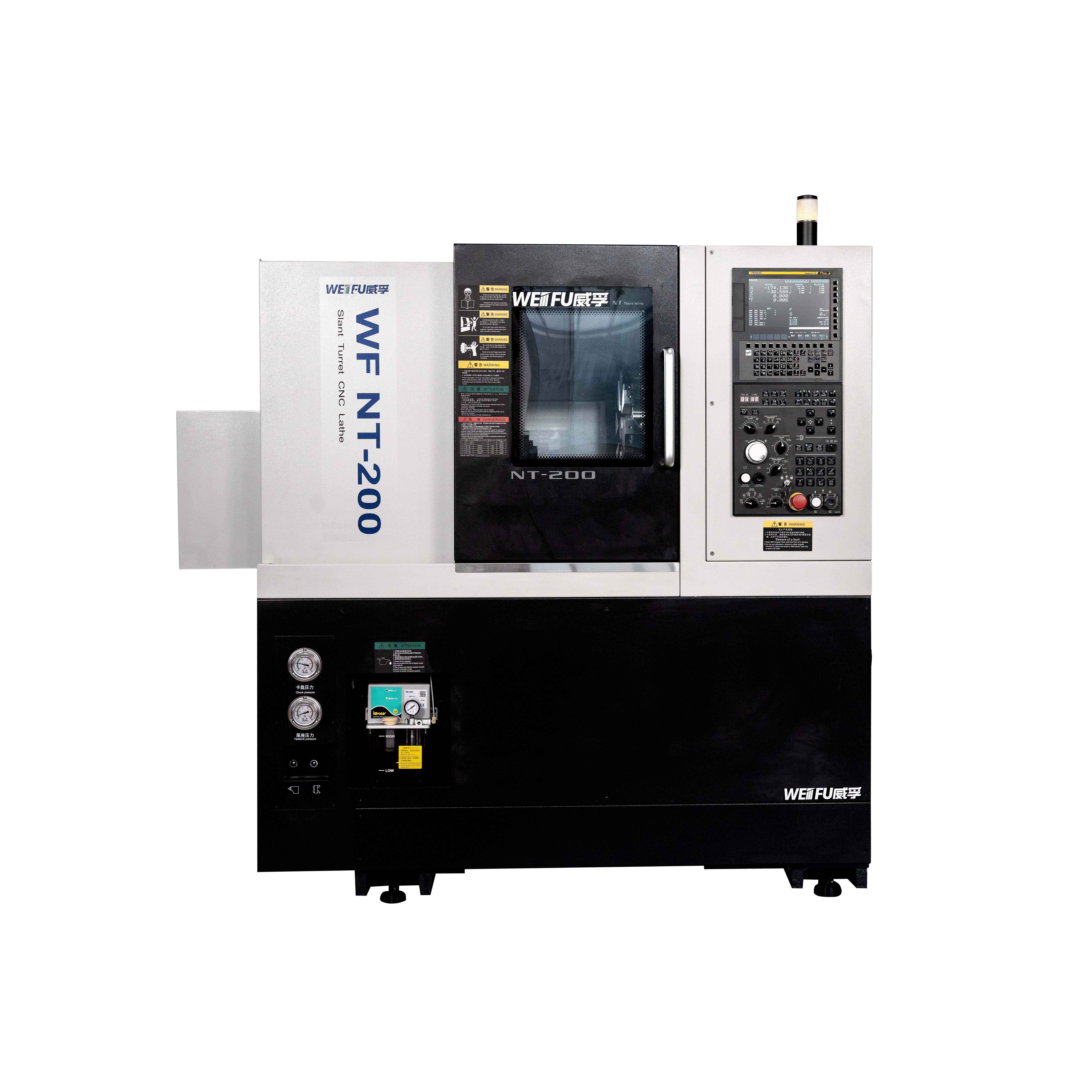
The Role of CNC Machines in High-Precision Manufacturing
Understanding the Precision and Accuracy of CNC Machined Components
CNC machines, those Computer Numerical Control beasts, can achieve really fine precision at the micron level thanks to their sophisticated programming and ability to adjust on the fly when things like tool wear or heat expansion happen during operation. A recent study from 2024 looked at how accurate these systems are, finding they cut down on size variations by about 72% over traditional approaches. This kind of accuracy makes it possible to manufacture all sorts of complicated shapes that are just plain impossible with older techniques. Industries like automotive manufacturing and aerospace engineering rely heavily on this capability because their parts need to fit together perfectly every single time.
How High Precision & Repeatability Ensure Reliability in Safety-Critical Applications
In aerospace, components like turbine blades and landing gear require tolerances as tight as ±0.001 mm, where CNC repeatability significantly reduces failure risks. Similarly, in automotive manufacturing, engine performance hinges on precision deviations exceeding 0.05 mm can impair combustion efficiency or increase emissions.
Data Insight: Tolerance Levels Achieved in Aerospace CNC Machining (±0.001mm)
| Industry | Typical CNC Tolerance | Critical Application Example |
|---|---|---|
| Aerospace | ±0.001 mm | Turbine blade cooling channels |
| Automotive | ±0.02 mm | Fuel injector nozzles |
Industry Paradox: Balancing Speed and Precision in High-Volume Automotive Production
While aerospace prioritizes extreme precision, automotive production demands both speed and accuracy. A Tier-1 supplier achieved ±0.05 mm tolerances while producing 12,000 transmission housings monthly an outcome made possible by AI-driven predictive maintenance and optimized toolpaths that balance throughput with quality.
CNC Machining in Automotive Manufacturing: Efficiency, Speed, and Innovation
CNC machines have transformed automotive manufacturing by delivering unmatched efficiency, speed, and adaptability. Their ability to produce complex parts with micron-level precision makes them vital for modern vehicle development.
Transforming Engine and Transmission Component Manufacturing With CNC Machines
Critical components such as crankshafts, camshafts, and gearboxes are machined to tolerances under ±0.005 mm. CNC technology ensures strict adherence to specifications while preserving material integrity through optimized cutting parameters. Five-axis machining allows simultaneous multi-surface finishing, reducing production steps for engine blocks by up to 40% compared to traditional approaches.
Applications of CNC in Prototyping and Tooling for Rapid Development Cycles
Automakers use CNC machining to accelerate prototyping, shortening design validation from weeks to days. A 2023 industry study found that CNC-produced prototypes cut tooling development costs by 32% versus 3D-printed alternatives, offering superior strength and production-representative materials. This capability supports rapid iteration for electric vehicle battery enclosures and lightweight chassis systems.
Case Study: Reduction in Prototype-to-Production Time at a Tier-1 Automotive Supplier
A leading supplier integrated CNC systems across prototyping and production lines, achieving measurable improvements:
| Metric | Improvement | Timeframe |
|---|---|---|
| Prototype lead time | -55% | 2021–2023 |
| Tooling setup efficiency | +70% | 2021–2023 |
| Production ramp-up speed | +40% | 2021–2023 |
This integration enabled concurrent engineering of hybrid transmission components while maintaining AS9100 compliance.
Automation in CNC Machining for Improved Efficiency and Quality Control
Today's CNC cells make use of high speed machining methods which can really crank up productivity rates around 60% while cutting down on tool wear thanks to those smart speed adjustments. The latest laser scanning tech built into these systems picks up even tiny deviations measuring just 2 microns across, something that makes all the difference when manufacturing those critical brake components where safety is paramount. Since 2020, we've seen collaborative robots enter the picture big time, slashing the need for hands-on work in CNC operations by roughly 85%. This means fewer mistakes and faster production runs overall, though some shops still prefer having skilled workers double check certain parts manually despite the automation advances.
CNC Machining in Aerospace Manufacturing: Precision Under Extreme Demands
Producing Complex Geometries and Tight Tolerances for Aerospace Applications
CNC machines fabricate intricate aerospace components including fuel system housings and wing spar fittings to tolerances as tight as ±0.001 mm. This level of accuracy minimizes post-processing needs and ensures seamless assembly integration, particularly for hydraulic manifolds and sensor mounts.
Manufacturing High-Performance, Safety-Critical Parts Like Turbine Blades and Landing Gear
Turbine blades operating above 1,500°C benefit from CNC-machined surface finishes below Ra 0.4 μm, which reduce stress concentrations by up to 60% compared to manual processes. Landing gear components made from high-strength AISI 4340 steel withstand over 1 million fatigue cycles under 30G loads, thanks to precise material removal and residual stress control.
Trend Analysis: Growth in 5-Axis CNC Machining for Aerodynamic Components
Adoption of 5-axis CNC machining in aerospace has increased by 40% since 2023, driven by demand for curved compressor blades and conformal-cooled rocket nozzles. A 2025 industry analysis reveals that 72% of next-generation aircraft designs now depend on 5-axis capabilities to meet aerodynamic efficiency goals.
Additive Manufacturing vs. CNC Machining in Next-Gen Aircraft Design
While additive manufacturing offers advantages in material savings for non-structural brackets, CNC remains the preferred method for flight-critical components. A 2024 study showed that 78% of aerospace engineers favor CNC for high-stress parts like titanium flap tracks due to its consistent tensile strength 950 MPa versus 820 MPa in 3D-printed equivalents.
Advanced Materials and CNC Machining: Overcoming Material Challenges
Common Materials in Aerospace CNC Machining: Aluminum, Titanium, and Composites
CNC machines process key aerospace materials including aluminum (60% of airframe structures), titanium (essential for jet engines), and carbon fiber composites (25% lighter than aluminum alloys). Each presents unique machining requirements:
| Material | Key Properties | CNC Challenges |
|---|---|---|
| Aluminum | High strength-to-weight ratio | Chip evacuation, surface finish |
| Titanium | Corrosion resistance, high melting point | Work hardening, tool wear |
| CFRP Composites | Directional strength, lightweight | Delamination, abrasive fiber layers |
Challenges in Machining Advanced Materials Like Titanium and Carbon Fiber Composites
The poor heat transfer properties of titanium actually wear down cutting tools at around 40% faster rates than what happens with steel, according to AFRL research from 2023. Working with carbon fiber materials presents another headache for machinists because these composites are both abrasive and made up of multiple layers. Special drilling techniques become necessary just to avoid damaging the material during processing. Looking at industry trends, the latest Material Compatibility Report shows that roughly two thirds of aerospace companies have switched to diamond coated tools lately. These coated instruments last about three times longer when working on carbon fiber reinforced plastics, which makes all the difference in production efficiency for manufacturers dealing with these tough materials regularly.
Optimizing CNC Processes (3-Axis, 5-Axis, Turning, Grinding) for Material Integrity
5-axis CNC systems maintain optimal tool engagement angles during titanium machining, minimizing residual stresses and preserving fatigue resistance. For composites, adaptive control systems adjust spindle speeds in real time based on fiber orientation detected via force sensors reducing scrap rates by 29% in high-mix environments.
Quality Assurance, Compliance, and the Future of Smart CNC Systems
Ensuring Quality Through Automated Inspection and Real-Time CNC Process Monitoring
Modern CNC systems are getting really good at producing parts with almost no defects thanks to their built-in machine vision and AI capabilities. The aerospace industry has seen some impressive results from this technology too. Real time monitoring reduces those pesky dimensional errors by about two thirds when compared to old fashioned manual checks, according to research published by Ponemon back in 2023. What these advanced systems do is check each component against detailed 3D blueprints with an accuracy of plus or minus 0.002 millimeters, which meets all the strict safety requirements in aviation. Factories that implemented adaptive control systems reported cutting down on waste materials by roughly 40 percent last year, per a recent report on smart manufacturing practices. And guess what? They managed to keep their ISO 9001:2015 quality certifications throughout all this improvement.
Meeting ISO and AS9100 Compliance Standards
Automotive and aerospace CNC operations must comply with ISO 9001 (quality management) and AS9100 (aerospace-specific standards). Automated toolpath verification prevents 92% of tolerance violations in titanium aircraft components. Digital twin technology simulates entire machining sequences to satisfy FAA/EASA certification requirements before physical production begins.
The Rise of Smart CNC Cells With AI-Driven Predictive Maintenance
Modern Industry 4.0 CNC machines are now incorporating machine learning algorithms that can actually spot problems with spindle bearings as much as 800 hours before they fail. They also automatically tweak feed rates when working with different materials that have varying hardness levels. Plus these systems use thermal imaging technology to get the most out of coolant flow efficiency. According to recent data from factories around the world participating in smart manufacturing surveys, this kind of predictive maintenance has cut down unexpected shutdowns by nearly 60%. That makes all the difference for keeping those essential drivetrain components running without interruption during production cycles.
Projection: Market Shift Toward Fully Autonomous CNC Workshops by 2030
By 2028, 5G-enabled CNC clusters are expected to dominate 78% of aerospace machining operations (ABI Research 2024), accelerating the shift toward lights-out manufacturing. By 2030, closed-loop systems combining robotic tending with AI-driven optimization are projected to autonomously handle 94% of automotive transmission component production.
FAQ Section
What are CNC machines? CNC (Computer Numerical Control) machines are automated devices that use computer programming to control machine tools. They allow for high precision and the ability to produce complex parts that would be difficult or impossible to make manually.
Why are CNC machines important in manufacturing? CNC machines are crucial in manufacturing because they offer high precision, repeatability, and efficiency. They are used to produce parts that require tight tolerances, such as those needed in aerospace and automotive industries.
What materials can be processed with CNC machines? CNC machines can process a wide range of materials including metals like aluminum and titanium, as well as composites. Each material poses unique machining challenges that CNC machines can overcome.
How do CNC machines contribute to quality assurance? CNC machines contribute to quality assurance by incorporating automated inspection and real-time process monitoring. This results in reduced dimensional errors and consistent production quality.
Table of Contents
-
The Role of CNC Machines in High-Precision Manufacturing
- Understanding the Precision and Accuracy of CNC Machined Components
- How High Precision & Repeatability Ensure Reliability in Safety-Critical Applications
- Data Insight: Tolerance Levels Achieved in Aerospace CNC Machining (±0.001mm)
- Industry Paradox: Balancing Speed and Precision in High-Volume Automotive Production
-
CNC Machining in Automotive Manufacturing: Efficiency, Speed, and Innovation
- Transforming Engine and Transmission Component Manufacturing With CNC Machines
- Applications of CNC in Prototyping and Tooling for Rapid Development Cycles
- Case Study: Reduction in Prototype-to-Production Time at a Tier-1 Automotive Supplier
- Automation in CNC Machining for Improved Efficiency and Quality Control
-
CNC Machining in Aerospace Manufacturing: Precision Under Extreme Demands
- Producing Complex Geometries and Tight Tolerances for Aerospace Applications
- Manufacturing High-Performance, Safety-Critical Parts Like Turbine Blades and Landing Gear
- Trend Analysis: Growth in 5-Axis CNC Machining for Aerodynamic Components
- Additive Manufacturing vs. CNC Machining in Next-Gen Aircraft Design
- Advanced Materials and CNC Machining: Overcoming Material Challenges
- Quality Assurance, Compliance, and the Future of Smart CNC Systems

