
 EN
EN
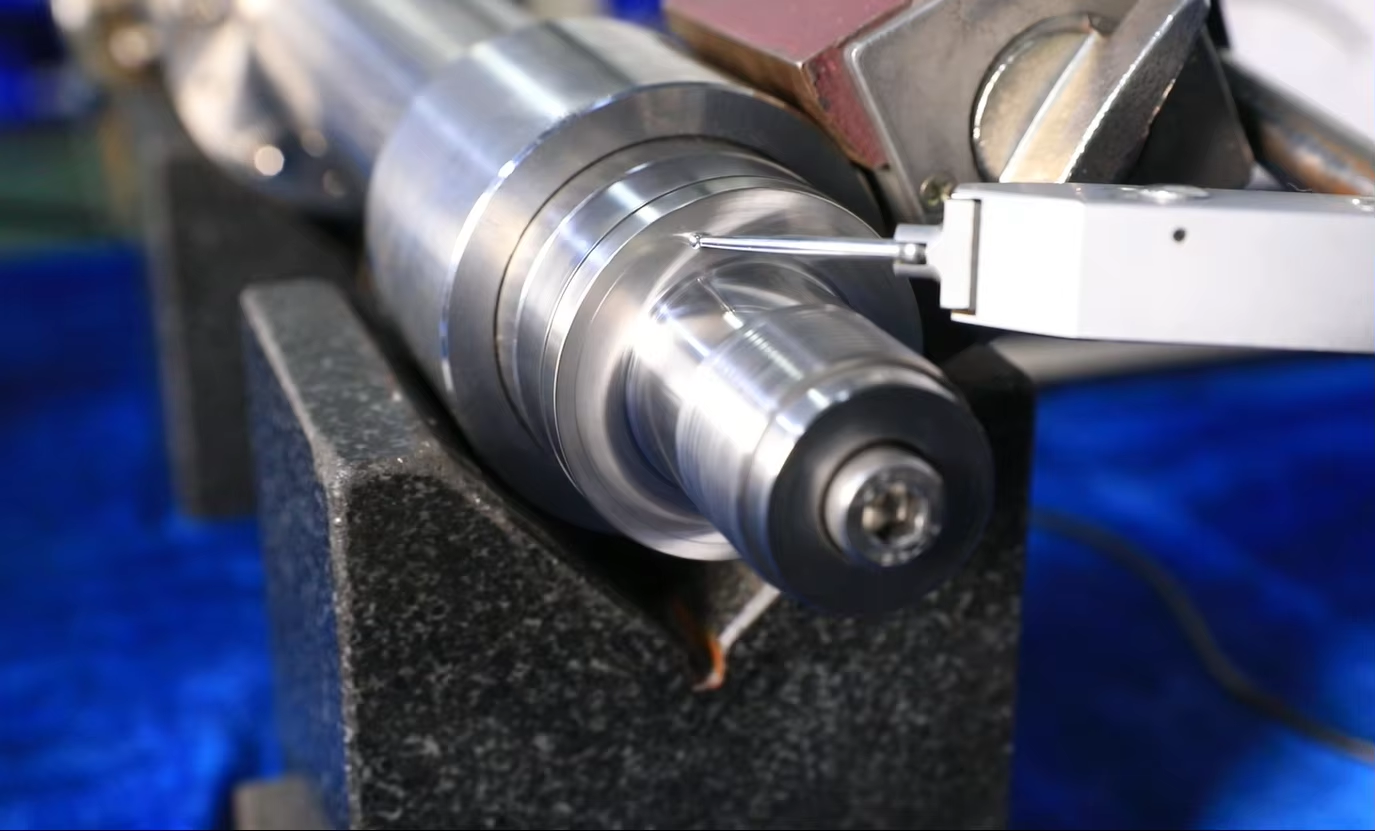
Cylindrical Grinder Fundamentals: Achieving Sub-Micron Tolerances and Mirror-Like Finishes
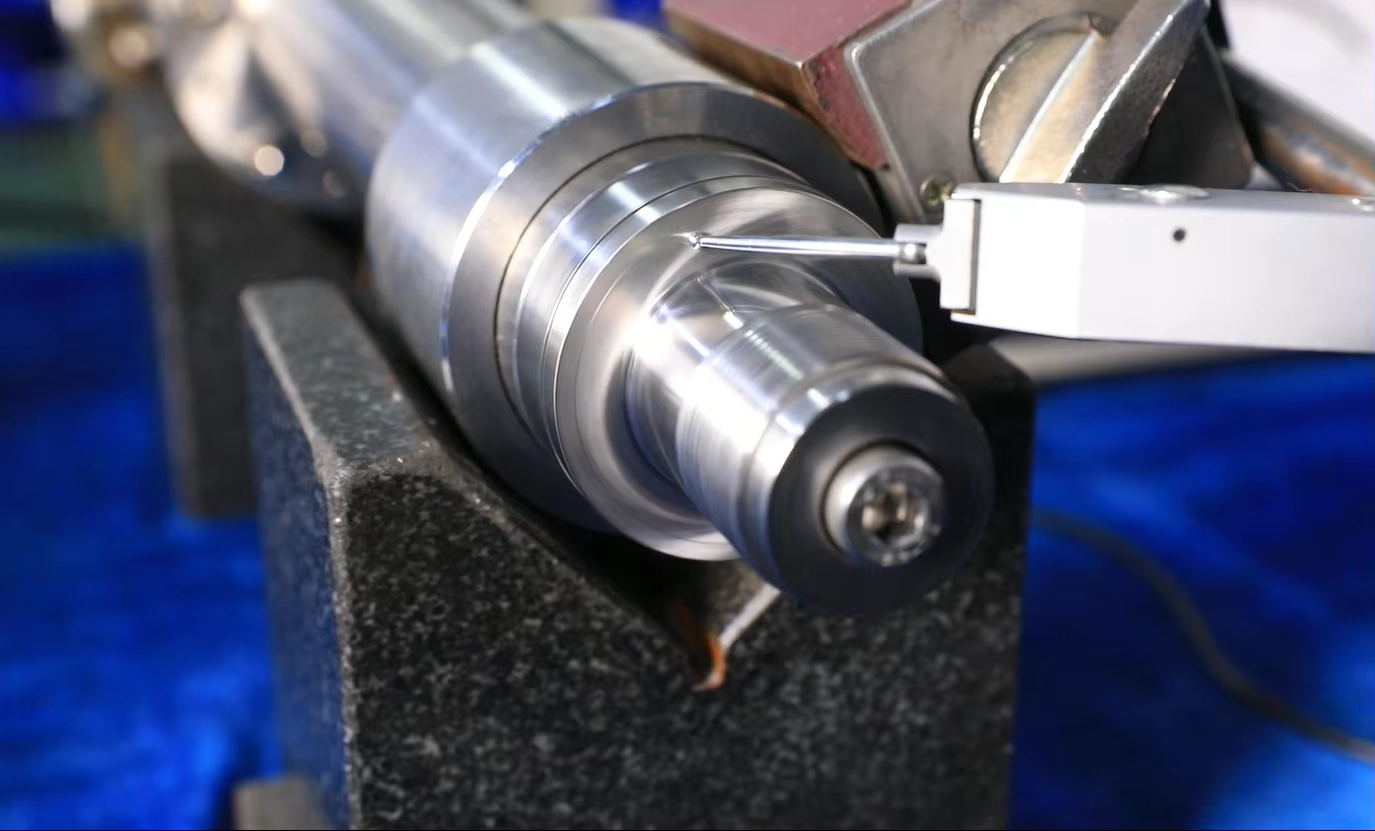
Mechanisms behind ±0.0001 dimensional accuracy and Ra ≤ 0.2 μm surface finish
Precision cylindrical grinders can reach sub-micron tolerances thanks to their rigid hydrostatic guideways which provide around 250 Newtons per micrometer of stiffness. These machines also feature thermal compensation systems that work against the expansion of spindles and beds during operation. Compared to milling processes, abrasive grinding takes away material in much smaller steps measured in microns. The system uses closed loop Automated Gauge Control or AGC technology to constantly adjust how deep the cutting action goes as it works. For those mirror smooth finishes where surface roughness needs to be below 0.2 micrometers, special diamond dressed CBN wheels spin faster than 35 meters per second to get rid of tiny surface irregularities. Linear encoders with resolutions down to 0.1 micrometers help keep track of any shape deviations, making sure cylinder roundness stays within about 0.0002 inches tolerance throughout the grinding process.
Critical process variables: Wheel specification, feed strategy, coolant dynamics, and their impact on surface integrity
Four interdependent variables govern surface integrity and subsurface condition:
- Wheel specification: Aluminum oxide wheels offer economy but wear faster; ceramic abrasives provide longer life and sharper cutting edges; CBN excels on hardened steels (≥60 HRC), maintaining dimensional stability over extended cycles.
- Feed strategy: Plunge grinding at 0.5–5 μm/pass minimizes heat accumulation, reducing tensile residual stresses by up to 40% versus traverse methods—critical for fatigue-sensitive components.
- Coolant dynamics: High-pressure nozzles (>15 bar) deliver coolant directly into the grinding zone, lowering interface temperatures by ~200°C and preventing rehardening cracks or phase transformations.
- Filtration: Sub-10 μm filtration removes abrasive swarf before recirculation, eliminating embedded particles that cause scratches exceeding Ra 0.4 μm.
This integrated control ensures burr-free, metallurgically sound surfaces—validated under SEM for medical implants where biocompatibility hinges on both geometry and microstructural integrity.
Advanced CNC Cylindrical Grinder Capabilities for Real-Time Accuracy Assurance
Laser-based in-process calibration and thermal error mapping for drift compensation
Today's CNC cylindrical grinders come equipped with laser interferometry systems that check dimensional accuracy continuously while the machine is actually working. These systems spot when tools start wearing down or when there's any drift in position during machining operations. When combined with thermal sensors spread throughout the equipment, special algorithms track how much the spindle, column, and bed expand in real time. The machine then makes automatic adjustments to the tool paths so it can maintain tolerances within about 0.0001 inches even when temperatures change either from the environment or the machining process itself. According to research published last year in Precision Engineering Journal, this kind of closed loop feedback cuts scrap rates by around two thirds compared to old fashioned manual recalibration methods. For manufacturers making critical components such as fuel injection rods, this matters a lot since those parts need extremely consistent roundness at microscopic levels for proper hydraulic function across their entire surface area.
Machine rigidity (≥250 N/μm) and hydrostatic guideways as foundational enablers of repeatability
When it comes to structural rigidity, there's really no compromise possible. High quality machines rely on mineral cast bases that dampen vibrations about eight times better than regular cast iron, which helps keep the grinding process stable despite outside interference. Instead of traditional mechanical contact points, these systems use hydrostatic guideways filled with pressurized oil films. This results in incredibly low friction levels, sometimes dropping below 0.001, and allows for repeatable positioning accuracy within just 0.1 micrometers in both directions. Putting all these components together creates dynamic stiffness ratings of at least 250 Newtons per micrometer. Even when removing material aggressively from hardened steel at impressive wheel speeds around 45 meters per second, the system maintains surface finishes with roughness values consistently below 0.2 micrometers across entire production runs. Such performance meets strict aerospace standards for concentricity as defined by ISO 2768-fine specifications.
Industry-Specific Precision Demands: Aerospace, Automotive, and Medical Applications of the Cylindrical Grinder
Aerospace turbine shafts: Cylindricity < 0.0002” and concentricity < 0.0001” per ISO 2768-fine
Turbine shafts spin around at over 20,000 RPM while dealing with intense heat and massive centrifugal forces. Because of these conditions, getting the geometry right isn't just important for performance but absolutely critical for safety reasons. When we talk about cylindrical grinding, what we're really looking at is achieving something like less than 0.0002 inches variation in roundness and under 0.0001 inches deviation from centerline, which meets those strict ISO 2768 fine tolerances needed for parts that rotate like airfoils and drive components. The whole system needs to stay thermally stable, be built super rigidly, and aligned precisely to stop vibrations caused by imbalances. These vibrations matter a lot because they affect how much fuel gets burned, whether emissions stay within legal limits, and most importantly, if the aircraft can safely complete its mission. And let's not forget about high pressure coolant systems either. They play their part too by protecting metal surfaces from damage when doing those last few finishing operations where things get really hot and delicate.
Medical implant components: Biocompatible material challenges and burr-free geometry control
When working with titanium alloys and those porous coated cobalt chrome implants, the grinding process needs to maintain the material's microscopic structure while getting that surface roughness down below 0.1 microns. This helps cut down on bacteria sticking to surfaces and supports better bone integration. The specialized CBN grinding wheels used here have been designed with specific bonding structures that stop tiny fractures from forming in these sensitive coating layers. For contamination control, coolant systems need to filter particles smaller than 10 microns, and strict sterile handling procedures must be followed throughout. Precise geometry control is also critical for components like hip stems, spinal rods and dental abutments. Getting the dimensions right means proper fitting and even load distribution across these medical devices, which ultimately reduces the chances of needing revision surgeries and improves how patients fare over time.
FAQs about Cylindrical Grinding
What is the significance of hydrostatic guideways in cylindrical grinding?
Hydrostatic guideways are crucial for ensuring extremely low friction and high stiffness in grinding operations, which contributes to achieving sub-micron tolerances and maintaining repeatable accuracy.
How does CNC technology enhance cylindrical grinder accuracy?
CNC technology enhances accuracy through real-time feedback systems such as laser interferometry for calibration and thermal error mapping for drift compensation. This leads to improved dimensional control and reduced scrap rates.
Why is coolant filtration important in cylindrical grinding?
Coolant filtration is vital to prevent abrasive swarf and other contaminants from embedding into the surface, ensuring a high-quality finish with minimal surface roughness.
What industries benefit the most from precision cylindrical grinding?
Industries like aerospace, automotive, and medical greatly benefit from precision cylindrical grinding due to their need for high tolerance levels and surface integrity in critical components.
Table of Contents
- Cylindrical Grinder Fundamentals: Achieving Sub-Micron Tolerances and Mirror-Like Finishes
- Advanced CNC Cylindrical Grinder Capabilities for Real-Time Accuracy Assurance
- Industry-Specific Precision Demands: Aerospace, Automotive, and Medical Applications of the Cylindrical Grinder
- FAQs about Cylindrical Grinding

