
 EN
EN
Daily and Weekly Preventive Maintenance for CNC Milling Machines
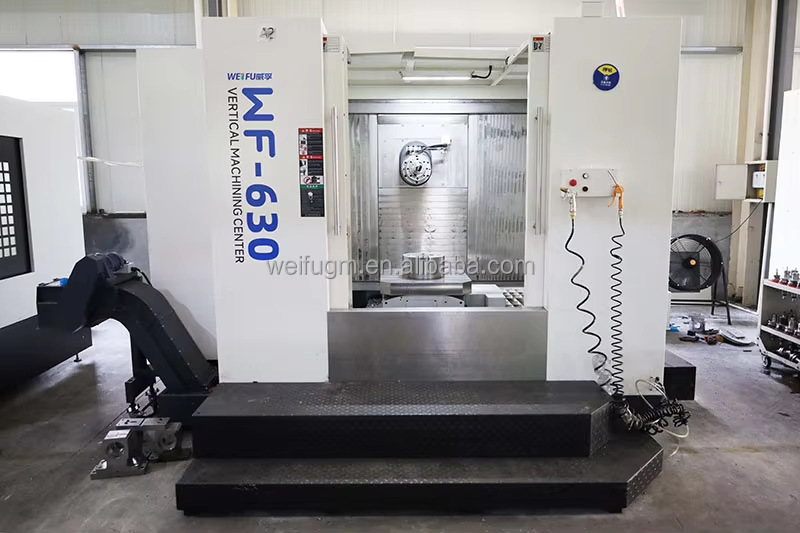
Unplanned machine downtime costs manufacturers an average of $740k annually (Ponemon Institute 2023). Implementing rigorous daily and weekly preventive maintenance routines mitigates this risk while extending your CNC Milling Machine's lifespan.
Pre-Shift Checks: Coolant Level, Lubrication Points, and Emergency Stop Functionality
Before operations begin, conduct these critical checks:
- Coolant Verification: Inspect reservoir levels using a refractometer to maintain proper oil/water concentration. Low or degraded coolant causes thermal distortion in workpieces and accelerates tool wear.
- Lubrication Audit: Confirm automatic systems dispense grease to rails, ball screws, and gears per OEM specs. Dry lubrication points accelerate wear by up to 300% (Machinery Lubrication 2023).
- Emergency Stop Test: Validate all E-stop buttons halt spindle and axis movement instantly,—no delay or residual motion.
Post-Operation Cleaning and Visual Inspection for Leaks, Debris, and Abnormal Wear
After machining, prioritize these tasks:
- Debris Removal: Clear chips from tool changers, enclosures, and coolant trays using non-metallic brushes,never compressed air, which forces particles into seals and bearings.
- Leak Detection: Check hydraulic lines, spindle housings, and lubrication manifolds for fluid seepage. Even minor drips indicate early seal failure or fitting loosening.
- Wear Assessment: Examine way covers and ball screw wipers for tears; inspect cutting tools for chipping or flank buildup–both often signal underlying toolpath or rigidity issues.
Consistent execution reduces calibration drift by 60% and cuts repair costs by 45% versus reactive maintenance.
Optimizing Lubrication and Coolant Systems on CNC Milling Machines
Proper lubrication and coolant management are critical for sustaining CNC milling machine performance and longevity. Inefficient systems accelerate wear, increase downtime, and inflate operational costs by up to 20% (SME 2023).
Precision Lubrication of Rails, Ball Screws, Spindles, and Gears
When it comes to keeping those high stress parts running smooth, targeted lubrication really makes a difference. Linear rails and ball screws need something thick like high viscosity grease to stop metal parts grinding against each other and messing up their ability to return to exact positions time after time. Spindles and gears work best with oil mist or MQL systems. These methods spread the lubricant evenly without leaving too much residue behind which can collect dirt or actually make heat management worse. Sticking to regular lubrication schedules helps control thermal expansion so everything stays where it should be. Skip these maintenance checks and watch out for early bearing failures and expensive spindle swaps down the road. Most shops find that following manufacturer recommendations on lubrication intervals saves money in the long run despite the upfront hassle.
Coolant Management: Concentration, Filtration, and Microbial Control
The quality of coolant has a big effect on how long tools last, what kind of surface finish we get, and whether machines run reliably day after day. Weekly checks using refractometers are pretty standard practice these days. Most shops aim for around 5 to 10 percent concentration levels, though this can vary based on what exactly is being machined. The goal here is finding that sweet spot between keeping things cool enough, preventing rust issues, and controlling those pesky coolant mists. When it comes to getting rid of tiny metal bits that ruin coolant performance and block nozzles, multi stage filtration systems work best. Some facilities use magnetic separators first, then paper filters, while others go with centrifugal methods. Bacteria growth remains a real problem particularly with emulsion type coolants. Not only does it shorten how long coolant stays good, but it also creates unpleasant smells and poses health risks for workers. To tackle microbial problems, most plants add biocides once a month or so. Keeping pH levels somewhere between 8.5 and 9.2 helps too. And don't forget about air flow management since lack of oxygen actually encourages bad bacteria growth. Recent research from 2023 found that when coolant systems are properly maintained, tool life in titanium machining applications can actually double or even triple. More advanced manufacturing environments now incorporate smart sensors that automatically adjust coolant concentrations and send warnings when contamination starts becoming an issue.
Ensuring Spindle Integrity and Taper Accuracy on CNC Milling Machines
Thermal Stability Monitoring and Axial/Radial Play Inspection
Keeping spindles at stable temperatures helps avoid those annoying dimensional changes that go over 0.0005 inches (about 0.0127 mm) when machines run for long periods. Most shops install either infrared sensors or built-in thermistors to watch out for temperature swings that cross what the manufacturer says is normal (usually plus or minus 1 degree Celsius around room temp). These devices let operators adjust things on the fly as temps change. When checking for play in bearings, many maintenance teams grab laser alignment gear or dial indicators once a month. This regular check catches wear problems before they create tiny but costly inaccuracies. Too much play shows up in several ways actually surface finish issues, machine chatter, or tools breaking sooner than expected. Fixing these issues while still small can cut down on wasted materials significantly some plants report cutting scrap by almost a third when they catch problems early enough.
Taper Cleanliness, Contact Verification, and Drawbar Force Calibration
When tool tapers get contaminated, they can create misalignment problems as small as 0.0013 mm (about 0.00005"), which might seem tiny but actually ruins precision work on aerospace components or medical devices where tolerances are extremely tight. For daily maintenance, it's important to clean those spindle tapers regularly using lint-free swabs along with solvents that leave no residue behind. After cleaning, technicians should perform contact checks with Prussian blue dye to make sure at least 85% of the taper surface makes proper contact. Drawbar force needs checking every three months according to manufacturer specs, usually somewhere between 1,200 and 2,500 psi. If the force isn't strong enough, tools tend to slip out mid-cut when cutting forces are high. But going too far the other way applies unnecessary stress that wears down spindle bearings faster than normal. Getting this right matters because it keeps the tool holder securely engaged each time and maintains accurate Z-axis positioning throughout multiple operations. These details matter a lot when trying to hit those super fine tolerances below 0.001".
Verifying Axis Alignment and Positional Accuracy of CNC Milling Machines
Getting accurate results from CNC milling really depends on checking how well the machine's axes are aligned and positioned correctly. Even tiny deviations of around 0.005 mm can lead to big problems down the line, particularly when making parts for things like aircraft engines or medical implants where tolerances matter a lot. Start by running tests with laser interferometers or ballbars to see where there might be issues with straight line movements across all axes these tools actually track what happens during those circular cuts and diagonal paths in real time. When dealing with rotating axes which are pretty common in 5-axis machines, we need to check angles using rotary encoders along with 3D probing equipment. Squareness between X and Y axes is something else worth double checking with dial indicators attached to magnetic stands because if they aren't quite right, it will show up as slanted walls or weird shapes on finished products. Also important is making sure the spindle sits perfectly perpendicular to the worktable since any tilt creates uneven surfaces. According to recent industry data, nearly two thirds of unexpected machine stoppages happen because someone forgot to calibrate the axes properly (source: Precision Machining Report 2023). Many shops still skip recalibrating after maintenance work, changing tools, or even minor collisions with fixtures, this is a mistake many operators make over and over again. Regular checks not only cut down on wasted material by almost half but also helps keep machines running longer without breakdowns.
FAQ
Why is daily and weekly preventive maintenance important for CNC milling machines?
Preventive maintenance reduces machine downtime, extends lifespan, and saves costs by preventing unexpected failures.
What should be regularly checked before running CNC milling machines?
You should check coolant levels, lubrication points, and emergency stop functionality to ensure smooth operation and safety.
How does proper coolant management affect CNC machine performance?
Maintaining optimal coolant concentrations prevents rust, enhances tool life, and ensures reliable machine operation.
What are the consequences of neglecting spindle taper maintenance?
Taper contamination leads to precision issues, negatively impacting high-tolerance work on aerospace and medical components.

